 跳到内容

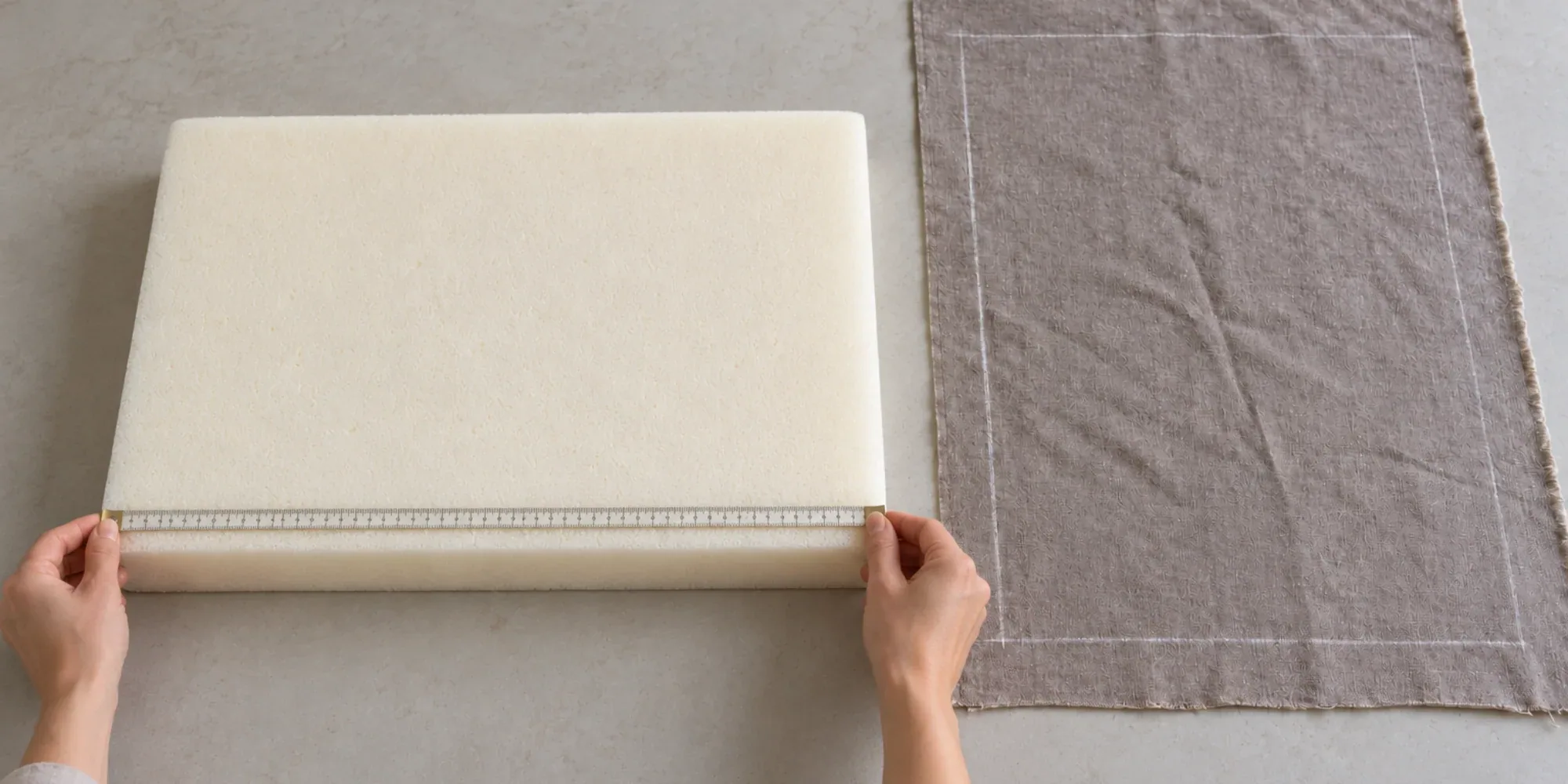
To determine the cut size for a dog bed foam insert, measure the dog in its typical sleeping position and add 6 to 12 inches to the length and width to allow for shifting. For the cover, you must calculate two separate additions: a seam allowance (typically 1/2 to 5/8 inch per edge for sewing) and an ease allowance (1/4 to 1/2 inch total across the dimension). The ease allowance ensures the fabric does not pull too tightly across the foam. If the cover lacks this ease, it will compress the edges of the foam insert and cause the entire bed to buckle or curl upward. When working with foam thicker than two inches, calculate the cover using a boxed or gusseted design, applying the same ease and seam allowances to the height of the side panels.
Determining the Foam Insert Cut Size
Designing a well-fitted dog bed begins with establishing the correct dimensions for the baseline foam insert. Relying solely on a dog's breed or weight to determine these dimensions often leads to an undersized bed. Breed averages do not account for a dog's individual proportions, nor do they factor in the specific way the animal behaves during rest. Instead of using generic sizing charts, the most accurate method for establishing the foam insert's cut size is to observe and measure the dog's actual sleeping footprint. This approach ensures the resulting base provides adequate surface area for the dog to rest entirely on the foam without limbs hanging off the edges.
To determine this baseline footprint, observe the dog over a few days to identify its preferred sleeping positions. A dog that tightly curls into a ball requires a very different foam profile than one that sprawls entirely on its side with legs fully extended. Wait until the dog is deeply asleep in its most expansive, relaxed posture. Using a flexible measuring tape, measure the dog from the tip of its nose to the base of its tail. Next, measure the widest cross-section of the dog's resting body, which typically spans from the highest point of the back down to the tips of the extended paws. These two measurements represent the absolute minimum surface area the dog occupies while resting.
Creating a foam insert exactly to these minimum dimensions is insufficient, as it leaves no room for the dog to shift or adjust positions during sleep. To calculate the final cut size for the foam base, you must add a buffer of six to twelve inches to both the measured length and the measured width. Adding this extra space prevents the dog from sliding off the edge of the mattress when stretching or rolling over. For dogs that frequently change positions or prefer to sprawl completely, leaning toward the twelve-inch addition provides a more forgiving sleeping surface. For dogs that consistently sleep in a tight curl, a six-inch buffer is often enough to keep them centered on the foam block.
This baseline foam measurement serves as the structural foundation for the entire project. For example, if you are designing a Custom Orthopedic Memory Foam Dog Bed, getting the raw foam dimensions right is critical because this exact cut size will dictate all subsequent cover and allowance calculations. An insert that is cut too small cannot be corrected by the cover later, and an oversized insert will require significantly more fabric and floor space than initially planned. Finalizing the length and width of the polyurethane foam block first allows you to move forward with accurate material estimates for the rest of the assembly. For company-specific information, see Lincellipet.
When finalizing the cut size, consider the practical trade-offs between an expansive sleeping surface and the constraints of the room where the bed will be placed. A significantly larger foam insert offers maximum positional freedom, which is particularly beneficial for dogs with limited mobility that struggle to readjust their bodies tightly. However, larger foam blocks require correspondingly larger fabric yields for the protective cover and increase the overall footprint in the living space. If the calculated cut size is too large for the intended room, you may need to reduce the buffer slightly, provided the dog's core sleeping footprint remains fully supported on the foam without resting directly on the hard floor.
Accounting for Foam Thickness and Density
Once the baseline length and width are established, the next critical dimension is the foam insert's thickness. Thickness dictates whether the cover can be a simple two-piece envelope or requires a three-dimensional boxed design with side panels called gussets. Thin foam can often fit into an envelope-style cover that relies on fabric ease to accommodate the slight height. However, foam thicker than two inches requires a gusset cut to match the foam's height. This vertical dimension must be incorporated into the fabric calculation. Attempting to squeeze a thick insert into a flat cover compresses the edges, causing the bed to buckle upward.
The necessary thickness of the bed is fundamentally tied to the physical properties of the polyurethane foam, specifically density and firmness. Density refers to the foam mass per cubic volume, correlating with durability, while firmness dictates how much the material yields under weight. According to the official technical guidelines for CertiPUR-US certification, flexible polyurethane foam used in furniture and bedding is evaluated based on specific physical property and environmental criteria. Understanding these properties is essential because placing a heavy dog on low-density, overly soft foam causes the animal to sink to the floor, rendering the thickness ineffective. Technical Guidelines
These properties are especially critical when designing beds for senior dogs or those requiring joint management. If you are developing an insert for a dog with mobility limitations, a thicker, higher-density base provides the resistance needed to support the skeleton without bottoming out. The organization Canine Arthritis Resources & Education notes that it provides evidence-based tools and articles to help identify, diagnose, and manage canine arthritis, emphasizing management options to keep dogs active. When building a bed for an arthritic dog, the foam must be thick enough to cushion joints but firm enough to allow easy standing. Excessively soft foam can act like a trap for an animal with weakened hind legs, making it difficult to gain traction when rising. Canine Arthritis Resources & Education | Dog arthritis tips and resources
When measuring the cut size for thicker inserts, the structural geometry of the cover changes. The gusset must match the exact height of the foam block, plus seam allowances on the top and bottom edges. Additionally, thicker foam has more vertical surface area that generates friction against the cover when the dog steps onto the bed. If the gusset is cut exactly to the foam height without vertical ease allowance, the side fabric pulls taut when the foam depresses. This tension strains the zipper and seams. Adding a modest ease to the gusset ensures the foam can compress downward without instantly pulling the side panels inward.
As the scale of the foam insert increases, these calculations become a more prominent part of the design process. For example, when structuring a large-format project like a Custom Foldable Human Dog Bed, the increased depth of the foam alters the fabric yardage needed for the side panels. If a dual-layer foam structure is utilized, such as a dense base laminated beneath a softer memory foam layer, the total combined thickness determines the final gusset measurement. You must measure the exact finished height of the assembled polyurethane block rather than relying on nominal supplier specifications. Verifying this actual vertical dimension ensures the seam and ease allowances accommodate the foam without warping its supportive structure. For company-specific information, see Lincellipet.
Calculating Seam and Ease Allowances for the Cover
Once the physical dimensions of the foam insert are finalized, you must calculate the fabric required for the cover. Novice builders often make the mistake of adding only a single extra measurement to their fabric cuts, conflating the space needed to assemble the cover with the space needed to house the foam. To achieve a cover that fits well and functions correctly, you must calculate and apply two entirely separate measurements to the baseline foam dimensions: a seam allowance and an ease allowance.
A seam allowance provides the necessary fabric margin between the raw edge of the textile and the stitched line. This margin ensures the sewing machine has enough material to grip and prevents the woven edges from fraying under the dog's weight. For standard dog bed construction, a seam allowance of one-half to five-eighths of an inch per edge is typical. Because this fabric is folded inward and consumed during the sewing process, the seam allowance contributes nothing to the interior volume of the finished cover. If you cut your fabric using only the foam dimensions plus a seam allowance, the finished interior cavity will exactly match the uncompressed foam block.
Creating an interior cavity that exactly matches the foam block causes structural problems because it ignores the physical interaction between the two materials. This is where the ease allowance becomes essential. An ease allowance is a slight increase in the overall internal volume of the cover, usually totaling one-quarter to one-half of an inch across each major dimension. Unlike the seam allowance, the ease allowance remains part of the finished interior space. It provides the necessary breathing room for the foam to expand fully and settle into the corners of the cover without binding against the fabric.
When a cover lacks this crucial ease allowance, the fabric exerts constant inward tension against the foam insert. If the fabric pulls tightly across the top and bottom surfaces, it will compress the outer edges of the foam block. This compression forces the center of the bed to bow upward or causes the corners to curl off the floor, destroying the flat, stable sleeping footprint established during your initial measurements. A bowed bed is problematic because it creates an uneven surface that requires the dog to make constant muscular adjustments to maintain balance while resting.
When working with foam thicker than two inches, applying these allowances requires careful attention to the three-dimensional geometry of a boxed cover. A boxed cover consists of a top panel, a bottom panel, and a continuous side panel known as a gusset. You must add both the ease allowance and the seam allowance to every connecting edge. For the top and bottom panels, you add the allowances to the overall length and width. For the gusset, you must add the allowances to the vertical height of the side panel as well as its total circumference.
For example, if your foam insert is precisely four inches thick, cutting a four-inch gusset plus seam allowances will yield a finished sidewall of exactly four inches. While this sounds correct, the resulting lack of vertical ease means the top and bottom panels will immediately pull taut against the foam edges. When the dog steps onto the bed, the downward force stretches the side panels further, putting immense stress on the seams and the zipper closure. Adding a quarter-inch ease to the gusset height prevents this strain, allowing the foam to compress naturally without transferring mechanical stress directly to the stitching.
Determining the precise amount of ease requires balancing structural support against fabric tension. If you add too much ease, the cover will appear loose, creating wrinkles that can irritate the dog or excess folds that might invite chewing. If you add too little, you risk the curling effect and zipper failure. A total ease allowance of one-half inch across the length and width, and one-quarter inch across the thickness, offers a reliable starting point for a smooth, tailored fit that protects both the foam and the cover.
Adjusting Allowances for Fabric Elongation
The standard allowances discussed previously assume the use of traditional, non-stretch woven textiles. However, the exact ease allowance required for a dog bed cover heavily depends on the physical properties of the chosen fabric, specifically its elongation. Elongation refers to the degree to which a fabric can stretch or extend under tension. When a dog steps onto the bed, the foam compresses and expands outward laterally, placing immediate mechanical stress on the cover. If the fabric has the inherent ability to stretch, it absorbs some of this outward force. If the fabric is rigid, the cover must have enough built-in ease to accommodate the shifting foam volume. Understanding this dynamic allows you to adjust your baseline calculations to suit the specific textile you are working with.
The stretchability of a textile is a measured and standardized physical property in material science. For example, standard test methods such as ASTM D5034 cover the grab and modified grab test procedures for determining the breaking strength and elongation of most textile fabrics. This type of testing establishes exactly how much a material will yield before its structural integrity fails under tension. In practical terms for a dog bed builder, recognizing whether a fabric has high or low elongation dictates whether you must adhere strictly to mathematical ease allowances or if you can alter the pattern to create a more tailored, tension-fit cover. D5034 Standard Test Method for Breaking Strength and Elongation of Textile Fabrics (Grab Test)
When working with materials that exhibit high elongation, such as specialized knits, fleece, or fabrics woven with elastic fibers, the rules for ease allowance change significantly. Because these stretchy textiles can physically expand to wrap around the foam insert, you can safely reduce the built-in ease allowance. In some cases, builders deliberately apply negative ease, meaning the cover is cut slightly smaller than the baseline dimensions of the foam. A high-stretch cover cut with negative ease acts like a fitted sheet, stretching tautly over the insert to eliminate surface wrinkles. The innate elasticity of the material prevents it from exerting the kind of rigid inward compressive force that causes a foam block to buckle or curl.
Conversely, utilizing fabrics with low elongation requires strict adherence to precise ease allowances. Heavy-duty utility textiles, such as canvas, oxford cloth, tightly woven upholstery fabrics, or materials treated with heavy waterproof backings, generally possess almost zero stretch. Because these materials cannot yield to accommodate the shifting volume of compressed foam, the physical space for that expansion must be entirely built into the cover through the ease allowance. If you apply a negative ease or even a zero-ease calculation to a stiff, rigid fabric, the resulting cover will tightly bind the foam insert. This binding guarantees structural distortion, forcing the mattress to bow upward in the center as the unyielding fabric crushes the outer edges of the polyurethane block.
Adjusting your allowances for fabric elongation also requires assessing how that stretch interacts with the non-stretch components of the cover, particularly the zipper and the stitched seams. Even if a knit fabric has excellent elongation, the thread used to sew the seams and the tape of the zipper closure likely do not. If you rely too heavily on the fabric's stretch by cutting the cover exceptionally small, the textile will pull forcefully against the rigid zipper track every time the dog uses the bed. This concentrated tension often leads to premature zipper failure or snapped threads. Therefore, while high elongation allows you to reduce the overall ease, you must leave enough slack in the design so that the seams are not functioning under maximum, continuous stress.
Factoring in Durability and Abrasion Resistance
When constructing a dog bed intended to withstand heavy daily use, digging, and nesting behaviors, the choice of cover material naturally shifts toward heavy-duty protective fabrics. Selecting these materials introduces new variables into your measurement calculations. Unlike lightweight materials, textiles engineered for high durability are inherently stiff. They possess a dense weave and often incorporate heavy backings that alter how the cover interacts with the foam insert. Because these materials will not yield under pressure, your gusset measurements and ease allowances must be calculated with strict precision to prevent structural failure.
The durability of a cover material is often evaluated based on its ability to withstand surface wear. In material testing, standardized methods exist to measure this property. For instance, ASTM D3884 provides a standard guide for determining the abrasion resistance of textile fabrics using the rotary platform abrader method. Fabrics that perform well in this type of abrasion testing, such as heavy canvas or specialized upholstery textiles, resist physical degradation from a dog's claws. However, the exact structural characteristics that provide high abrasion resistance, such as thick yarns and a tight, unyielding weave, also make the fabric exceptionally rigid. D3884 Standard Guide for Abrasion Resistance of Textile Fabrics (Rotary Platform Abrader Method)
This rigidity directly affects how you must approach the three-dimensional geometry of a boxed cover. When a dog steps onto the bed, the polyurethane foam compresses downward and expands outward laterally. If the cover is made from a flexible material, the fabric can subtly shift and conform to the changing shape. A highly abrasion-resistant fabric cannot make this adjustment. If the gusset is cut exactly to the uncompressed height of the foam block without an adequate vertical ease allowance, the outward expansion of the foam immediately hits a rigid fabric wall.
When the foam pushes against an unyielding gusset, the mechanical stress must go somewhere. Because the heavy-duty fabric will not stretch, the downward and outward force transfers entirely to the weakest points of the assembly: the stitched seams and the zipper closure. This concentrated tension is a primary cause of premature failure in durable dog beds. The abrasive-resistant fabric remains completely intact, but the threads snap under the pressure, or the zipper teeth pull apart. To prevent this, the ease allowance must be generous enough to accommodate the foam's compression cycle before the tension reaches the stitching.
Calculating the allowances for heavy textiles requires a slight increase over standard baseline measurements. While a one-quarter inch vertical ease might suffice for standard materials, a rigid, abrasion-resistant fabric often requires three-eighths to one-half inch of vertical ease along the gusset height. This additional space ensures the sidewall can bow slightly outward as the top panel moves downward, allowing the foam to compress freely. Similarly, the overall length and width ease allowances may need expansion so the stiff corners of the cover do not crush the corners of the foam insert inward.
Incorporating these larger ease allowances creates a distinct visual trade-off. A cover built from stiff, durable fabric with the correct mechanical ease will not look as tightly tailored as a high-stretch cover. The necessary extra fabric will create slight folds or a looser appearance when the bed is unoccupied. Recognizing this trade-off is essential for a successful design. Prioritizing a perfectly taut, wrinkle-free appearance with a highly abrasion-resistant fabric guarantees that the seams will operate under maximum tension, severely limiting the functional lifespan of the finished dog bed cover.
Prototyping the Fit Before Final Assembly
Before cutting into expensive final fabrics, creating a mock-up cover is a practical step to verify your measurements. Because every combination of foam density and fabric stretch behaves slightly differently, a prototype allows you to test how the calculated seam and ease allowances function in reality.
Construct the test cover using an inexpensive textile that shares a similar weight and stretch profile with your final material. Once assembled, insert the polyurethane foam block and close the zipper. Observe how the bed rests on a flat surface. If the corners curl upward or the center bows, the ease allowance is too small, meaning the fabric is over-compressing the foam. If the cover sags heavily and creates deep wrinkles, you need to reduce the ease allowance to achieve a tailored fit.
Pay close attention to the zipper and the seams along the gusset. Apply downward pressure to the top of the bed to simulate the dog resting. Under this load, the zipper must remain straight and operate smoothly without binding or revealing visible gaps between the teeth. Excessive tension along the closure indicates that the side panels require slightly more vertical ease to accommodate the foam compression. Testing these mechanical stress points during the mock-up phase prevents premature seam failure in the finished product.
Iterating on a custom pattern often requires patience and troubleshooting. Research into pet-oriented social networks indicates that dog owners consistently seek out advice and focus heavily on their bonds with their animals, making these communities a helpful resource if you encounter unique structural challenges. By refining this test cover until the foam lays flat and the seams withstand simulated weight without straining, you establish a reliable final pattern for the finished dog bed. The more people I meet, the more I like my dog: A study of pet-oriented social networks on the Web | First Monday
Sources
- Technical Guidelines — 2025-03-31
- Canine Arthritis Resources & Education | Dog arthritis tips and resources
- D5034 Standard Test Method for Breaking Strength and Elongation of Textile Fabrics (Grab Test)
- D3884 Standard Guide for Abrasion Resistance of Textile Fabrics (Rotary Platform Abrader Method)
- The more people I meet, the more I like my dog: A study of pet-oriented social networks on the Web | First Monday
