 跳到内容

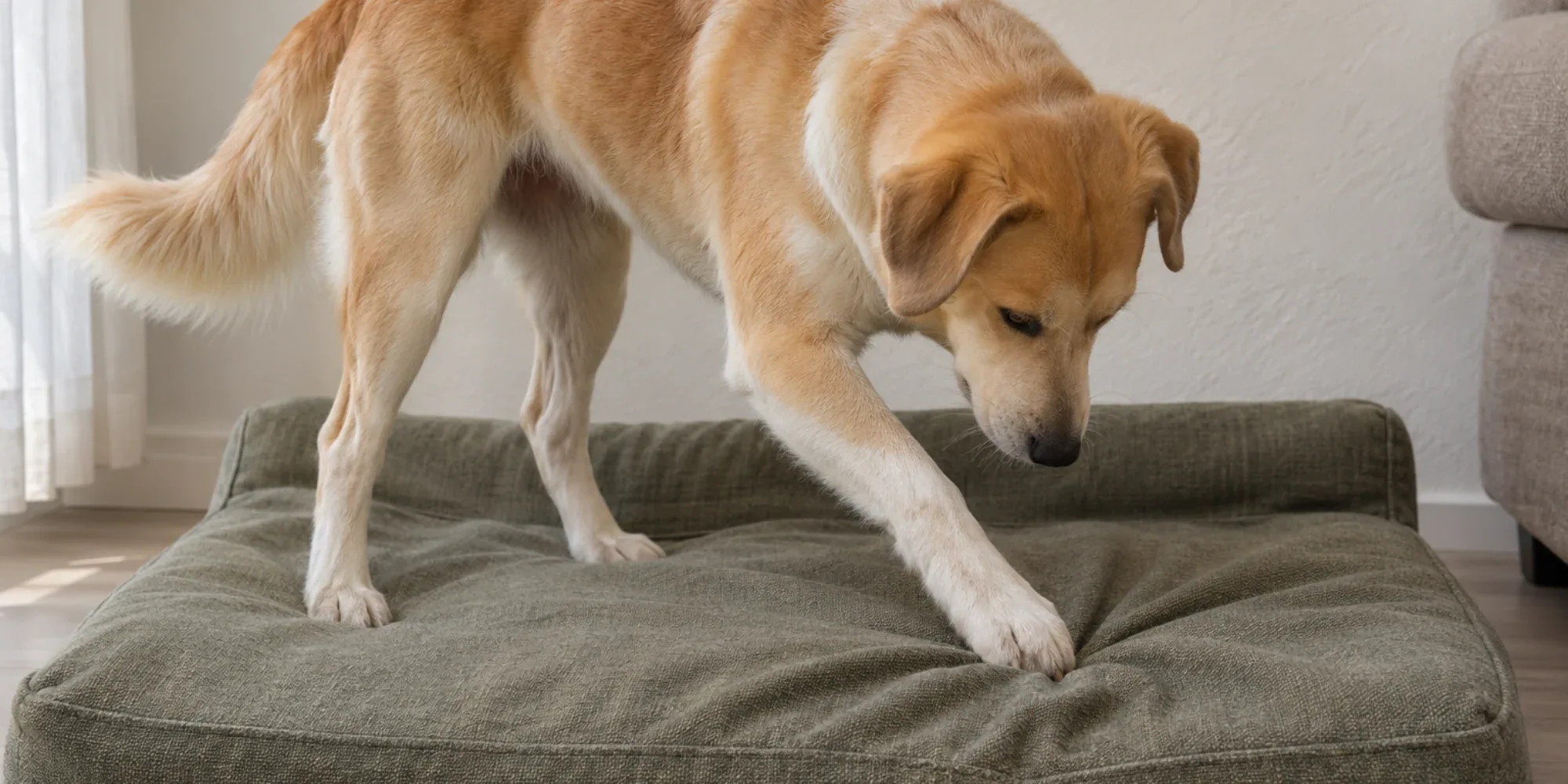
Dogs scratch their beds due to an instinctual nesting behavior. This action helps them arrange their sleeping surface, adjust temperature, and find a comfortable posture. Because this behavior involves repetitive digging with their claws, it subjects the bed's cover to concentrated abrasion and tension, progressively wearing down the fabric if it lacks sufficient structural strength.
The Instinctive Purpose of Nesting Behavior
Dogs scratching their beds before settling down is a deeply ingrained biological instinct rather than a correctable behavioral flaw. Long before domestic dogs had soft cushions provided for them, their wild ancestors had to prepare sleeping areas in unpredictable outdoor environments. This preparation involved pawing at the ground to trample tall grass, move rocks, and clear away debris like twigs or dry leaves. By scratching the surface, a dog is essentially trying to create a secure, comfortable depression in the dirt, a fundamental behavior commonly referred to as nesting. This shallow depression provided physical boundaries that made the animal feel safer while sleeping in the wild.
Beyond clearing physical obstacles, scratching served critical survival purposes. Digging into the earth allowed wild dogs to expose cooler soil during hot weather or create a shallow, wind-blocking pit to conserve body heat during cold nights. Even though a modern living room is climate-controlled, the instinct to regulate temperature by manipulating the sleeping surface remains highly active. Additionally, circling and scratching the ground helped drive away hidden pests that might be resting unseen in the brush. This repetitive routine ensured the immediate space was completely safe before the dog closed its eyes to rest.
Today, this sequence of scratching and circling persists when a dog approaches a clean indoor cushion. A dog will instinctively inspect the area, paw vigorously at the fabric, and turn around several times before settling. This familiar habit of selective positioning is widely recognized in everyday observations; for instance, a chapter in the book Why Life Speeds Up As You Get Older is titled ‘Memory is like a dog that lies down where it pleases.’ While this literary metaphor simply highlights the everyday reality of a dog independently choosing its resting spot, the subsequent pawing and circling dictate how the dog physically arranges that space to maximize security and comfort. ‘Memory is like a dog that lies down where it pleases’ (Chapter 1) – Why Life Speeds Up As You Get Older
Many owners mistakenly view bed scratching as a destructive habit that should be trained away. However, attempting to stop a dog from nesting causes unnecessary frustration for both the animal and the owner because the behavior is a fundamental, hardwired part of sleep preparation. Instead of trying to constantly correct the dog, it is more practical to accommodate the instinct by providing an environment built specifically to handle the physical wear. A durable resting surface allows the dog to fulfill its natural nesting drive without tearing the underlying fabric, ensuring the bed remains structurally intact over time. For company-specific information, see Lincellipet.
Because a dog uses its claws to forcefully dig into the sleeping surface, this repetitive action places highly concentrated mechanical stress directly on the top layer of the bed. The cover fabric must reliably withstand both the abrasive friction of the claws scraping rapidly across it and the severe localized pulling tension as the dog repeatedly tugs backward at the material. Understanding that nesting is a permanent fixture of canine behavior ultimately shifts the focus from modifying the dog to selecting the appropriate physical materials. This practical perspective helps owners accurately evaluate how well a bed will endure the inevitable daily scratching routine before the dog finally rests.
How Joint Health Influences Scratching and Positioning
While nesting is a universal biological instinct, a dog's underlying physical condition heavily influences the intensity, frequency, and duration of its scratching behavior. A healthy, agile dog typically prepares its spot, lies down, and settles quickly. Conversely, a dog experiencing joint stiffness or general discomfort may continue to pace, circle, and dig at the fabric for an extended period. This prolonged scratching does not indicate a stronger nesting drive; rather, physical pain prevents the animal from comfortably settling. Consequently, the dog restlessly repeats its instinctual preparation routine in an ongoing attempt to find a painless resting posture.
Joint discomfort often arises from structural issues or cumulative daily physical stress. In some canine patients, osteoarthritis develops simply from routine wear and tear on the joints over time, without a single inciting cause. Regardless of the exact origin, this progressive joint deterioration means that a previously quick, instinctual bedtime habit can gradually become a frustrating and physically demanding challenge for the dog as it struggles to lay down. Osteoarthritis in Dogs – American College of Veterinary Surgeons
If a bed lacks adequate structural support, a dog's compromised joints bear the brunt of its body weight pressing against a hard floor or a flattened cushion. The dog instinctively responds by continuing to scratch and paw at the surface. This persistent digging is a hardwired behavioral loop triggered by ongoing discomfort. Because the animal cannot achieve physical relief upon lying down, it repeatedly stands back up to prepare the space again, becoming trapped in a restless cycle of circling and scraping.
Certain canine demographics are particularly vulnerable to this joint pain. Older, overweight large breed dogs are commonly affected by osteoarthritis. Additionally, young large breed dogs dealing with developmental bone diseases frequently experience similar joint issues. Because these heavy dogs carry significant body mass, their need for a highly supportive resting posture is elevated, making their bed's structure a critical factor in their daily comfort. Osteoarthritis in Dogs – American College of Veterinary Surgeons
Owners observing persistent, restless scratching should consider it a potential indicator of joint discomfort rather than dismissing it as a quirky habit. To assist with management, the organization Canine Arthritis Resources and Education states that it provides free, evidence-based tools designed to help pet parents and veterinary teams identify the early signs of arthritis. According to the organization, these resources help owners understand available management options to keep their dogs active. Canine Arthritis Resources & Education | Dog arthritis tips and resources
Recognizing prolonged nesting as a sign of physical distress allows owners to pursue helpful interventions. For example, research shows that restricting a dog's diet can effectively lower the incidence of osteoarthritis in vulnerable areas like the hips, shoulders, and elbow joints. Osteoarthritis in Dogs – American College of Veterinary Surgeons
The combination of heavy, large-breed dogs and prolonged scratching places immense mechanical stress on a dog bed. When joint pain prevents a dog from settling, it repeatedly digs at the exact same spot, subjecting the fabric to continuous, concentrated abrasion. Providing a bed with immediate, stable structural support can help reduce the overall time spent scratching. When the sleeping surface effectively contours to the joints and distributes weight upon contact, the dog finds physical relief sooner. Interrupting this restless cycle of repetitive digging spares the cover from excessive daily wear while helping the dog rest comfortably.
The Physical Impact of Nesting on Bed Covers
Dogs' scratching behavior applies significant mechanical stress to bed covers. Since nesting is a biological instinct, the bed cover serves as the primary barrier that must absorb this energy. As the dog rapidly paws at the surface, it transfers downward and backward force through its claws. This repetitive motion subjects the fabric to two distinct types of structural stress at the same time: surface friction and localized pulling tension. Understanding this combination of forces clarifies why even a seemingly durable material can eventually fail under regular canine use, even when the dog is simply seeking a comfortable rest.
The most visible form of wear originates from surface abrasion. As the dog vigorously scrapes its paws back and forth to clear an imaginary sleeping spot, the hard edges of its claws rub directly against the bed cover's topmost fibers. This continuous, concentrated friction acts much like sandpaper. Over time, it progressively shaves down the individual yarns, causing the overall material to thin. On looser fabrics, this friction quickly causes the material to pill, fuzz, or develop bald patches. As the surface layer loses its structural integrity, it becomes less capable of protecting the underlying cushion.
Beyond simple scraping, a dog's natural nesting behavior involves a distinct digging and hooking motion. A dog instinctively tries to catch the ground to move debris backward. Indoors, its claws hook into the weave or knit of the bed fabric instead. This action introduces severe tensile stress, abruptly pulling individual threads away from their woven alignment. If the fabric lacks sufficient stability to resist this localized pulling, the yarns shift permanently. This creates microscopic gaps in the weave, which subsequently allows the claws to catch even deeper during the next scratching session.
When surface abrasion thins the yarns and localized pulling tension simultaneously stretches them, the bed cover faces a high risk of tearing. The thinned-out surface provides drastically reduced physical resistance, while continuous pulling repeatedly exploits these newly weakened areas. This progressive sequence demonstrates how a fabric loses its structural integrity over time. A permanent puncture typically occurs when the compromised fabric can no longer stretch or hold its shape under the dog's downward weight and backward tugging. Furthermore, structural seams and decorative piping are highly vulnerable to this combination, as stitching introduces natural boundaries where mechanical tension is heavily concentrated.
Evaluating how a bed cover will survive these combined forces requires analyzing its physical construction rather than simply feeling its surface softness. A loose, heavily textured knit might feel plush to a human hand, but it inherently provides numerous exposed catch points for a dog's claw. When claws catch easily, the rate of both abrasive and tensile damage accelerates rapidly. Conversely, a tightly woven textile presents a smoother, denser surface. This tighter structural barrier forces the claws to glance off rather than dig in, effectively deflecting abrasive friction and distributing pulling forces across a wider area of the fabric.
Evaluating Abrasion Resistance Against Claws
When a dog scratches its bed to prepare a resting space, the hard edges of its claws act as a persistent, concentrated abrasive force against the fabric's top layer. This friction isolates specific yarns, progressively stripping away their structural integrity. Understanding how quickly a material will succumb to this friction requires moving beyond simple touch. A fabric might feel thick to the human hand, but its ability to resist rapid, repetitive scraping depends heavily on its specific abrasive threshold. Because nesting behavior involves repeatedly targeting the same general spot to create a physical boundary for sleep, the cover experiences intense, localized abrasion. If the fabric lacks adequate surface density, the continuous grinding shears away top fibers, leaving the underlying structure vulnerable to tearing.
To formally evaluate how well a textile endures continuous surface friction before thinning, materials undergo standardized laboratory assessments. For instance, the ASTM D3884 standard outlines a specific guide for determining the abrasion resistance of textile fabrics using a rotary platform abrader. D3884 Standard Guide for Abrasion Resistance of Textile Fabrics (Rotary Platform Abrader Method)
While this testing method serves as a general textile standard rather than a specific measure of canine behavior, the mechanical principles of the rotary platform abrader provide a highly useful framework for understanding bed cover wear. During these evaluations, the material undergoes controlled, continuous rubbing from an abrasive wheel. This mechanical grinding offers a clear baseline for visualizing the repetitive friction occurring when a dog vigorously nests. The apparatus operates to observe exactly how the fabric degrades over time. Fabrics that endure prolonged friction in a controlled setting demonstrate a more robust surface. For dog owners, selecting a material with strong baseline abrasion resistance means the bed cover is far less likely to develop bald patches rapidly when subjected to the daily scraping of canine claws.
The physical structure of the fabric's weave plays a dominant role in determining how well it handles surface friction. Tightly woven textiles present a flat, dense barrier that naturally forces a dog's claws to glide over the surface rather than catching on individual threads. In contrast, looser knits or heavily textured plush materials provide numerous catch points, leading to faster mechanical breakdown under the same rubbing conditions. For company-specific information, see Lincellipet.
Selecting an appropriate bed cover involves balancing mechanical abrasion resistance against the dog's tactile comfort preferences. While densely woven canvas or heavy-duty synthetic blends reliably endure aggressive scratching, they inherently lack the immediate plush softness of a fleece cover. Owners must weigh the practical necessity of high durability against the initial texture. It is helpful to recognize that a remarkably soft material may simply require more frequent replacement, as the natural nesting instinct inevitably damages delicate fibers over time. Conversely, prioritizing a highly abrasion-resistant fabric ensures the bed remains structurally intact much longer, even if it feels slightly stiffer to the human touch initially.
Breaking Strength and Tearing Resistance
When a dog scratches its bed, the claws do not merely glide across the surface. They frequently hook directly into the material, pulling backward with the full force of the dog's leg muscles. This action shifts the primary mechanical burden away from surface abrasion and introduces severe pulling tension. The individual yarns that make up the bed cover must withstand this sudden, concentrated pressure without snapping. A fabric's ability to survive this initial intact pulling relies on two distinct physical properties: breaking strength and elongation. Breaking strength measures the amount of tension required to rupture the unpunctured fabric, while elongation measures how far the material can stretch before that failure occurs.
To evaluate how fabrics handle these intense pulling forces, the textile industry relies on standardized laboratory assessments. For example, the ASTM D5034 standard provides a test method covering grab test procedures for determining the breaking strength and elongation of most textile fabrics. During this mechanical assessment, a specific section of the material is clamped and pulled apart by a machine until it finally ruptures. Analyzing grab test performance helps estimate how well an intact material resists the concentrated tension applied when a dog hooks its claws into a bed cover and tugs backward. By determining both the maximum force the unpunctured fabric can withstand and exactly how far it stretches, evaluators can better understand its baseline structural limits. D5034 Standard Test Method for Breaking Strength and Elongation of Textile Fabrics (Grab Test)
Breaking strength represents the absolute limit of pulling force an unpunctured material can sustain before its fibers physically rupture. For a dog bed, this dictates whether a heavy dog can rip an intact cover by putting its weight onto its claws and tugging. Covers made from loosely spun yarns typically have low breaking strength, snapping almost immediately when a claw catches them. However, absolute strength alone is rarely enough; the fabric must also stretch. Elongation allows the fabric to yield slightly, stretching in the direction of the pull. By yielding, the fabric acts much like a shock absorber, dissipating the sudden mechanical energy across a wider area so a single thread does not bear the entire load.
While breaking strength and elongation protect the intact cover from ripping under tension, a different structural defense is required once the fabric is compromised. If a sharp claw manages to pierce the yarns, or if continuous surface abrasion creates a tiny hole, preventing that small puncture from propagating into a massive rip relies specifically on the fabric's tearing resistance. Tearing resistance, or tear strength, measures how well the woven threads stop an existing puncture from traveling further across the material. A fabric with high tearing resistance contains interwoven reinforcing yarns that effectively halt the widening of the gap, ensuring that a minor snag does not instantly unravel into a catastrophic tear that exposes the vulnerable inner foam.
This distinction between breaking strength, elongation, and tearing resistance explains why certain heavy-duty materials perform much better as dog bed covers. A tightly woven fabric with moderate elongation provides an ideal initial defense against localized pulling. The tight weave prevents the claw from catching deeply, while the elongation ensures the threads stretch slightly rather than snapping instantly. Furthermore, robust tearing resistance guarantees that if the daily repetition of a large dog's bedtime routine eventually punctures the surface, the damage remains contained. In contrast, very loose knits inherently lack both the underlying breaking strength and the necessary tearing resistance to survive constant canine nesting without sustaining permanent, widespread structural damage over time.
The Role of Interior Foam Quality
While the fabric cover takes the direct physical damage from a dog's claws during nesting, the interior foam structure underneath plays a crucial role in how well that cover survives. Nesting is a deeply ingrained biological instinct. Regardless of how thick or supportive a bed might be, a dog will naturally dig, paw, and circle to prepare its sleeping space. Because this vigorous scratching applies significant downward force and rapid backward pulling, the underlying foam must absorb this mechanical energy. If the interior collapses instantly, the outer fabric is subjected to a much harsher physical impact.
When a dog steps onto the bed and begins to scratch, a well-engineered foam core yields slightly to the animal's weight while remaining firm enough to prevent sinking completely through to the solid floor underneath. This flexibility acts as a vital shock absorber for the cover. If the foam bottoms out under the dog's paws, the textile is effectively pinched between the hard edges of the claws and the rigid floor. Striking a hard surface drastically increases both the abrasive friction and the localized pulling tension on the yarns, accelerating how quickly the fabric thins and tears.
Not all foam provides this necessary structural consistency, and a material's ability to maintain resilient support over months of use depends on its underlying physical characteristics. To ensure that materials meet established performance baselines rather than just feeling soft initially, specific evaluations outline rigorous methods. For example, the official technical guidelines for CertiPUR-US certification detail testing for physical property and environmental criteria in flexible polyurethane foam for use in furniture and bedding. These parameters help establish a reliable framework for understanding how the interior core will endure continuous mechanical load. Technical Guidelines
These physical property evaluations indicate how a foam core behaves during repetitive canine nesting. Two of the most critical factors for durability are density, which dictates the mass per unit volume or the amount of solid material within a specific given area, and firmness, which measures how much physical force is required to compress it. A high-density foam incorporates substantially more solid structure. This means the material is far less likely to break down, permanently flatten out, or develop sunken craters after months of supporting a heavy dog and absorbing the daily impact of its instinctual scratching routine.
Providing a dog bed with a resilient interior core is a practical way to manage the physical wear associated with nesting. While no type of foam will turn off a dog's hardwired biological instinct to scratch before sleeping, a high-density base ensures the outer cover is not repeatedly ground against a hard floor. Instead of eventually forming a permanent depression that forces the fabric to pool and wrinkle—creating loose folds that are easily snagged and ripped by claws—a durable foam interior consistently rebounds, keeping the fabric taut and structurally supported long after the dog finally settles.
Practical Management for Dog Owners
Managing dog bed wear effectively starts with recognizing that scratching before sleep is a biological nesting instinct, not a behavioral problem to correct. Since a dog will inevitably paw at its sleeping space to arrange a comfortable boundary, the most practical approach is to accommodate this drive with appropriate materials. Owners can prevent rapid fabric failure by purposefully selecting beds that combine supportive interior structures with highly durable outer covers, addressing both the dog's physical comfort and the mechanical stress of its claws.
The foundation of a resilient bed is its interior foam core. A high-density, firm base provides the structural stability needed to withstand the concentrated downward force of a dog pressing its paws into the material. When the bed prevents the animal's body weight from sinking completely through to the hard floor, the dog can achieve a comfortable resting posture more efficiently. This reliable physical support helps the dog settle quickly after its instinctual nesting routine is complete, limiting time spent digging in frustration. Reducing continuous scratching time immediately lessens the total abrasive friction and pulling tension the outer cover endures, extending the product's usable life.
For the outer cover, owners must balance the dog's tactile comfort with strong mechanical resistance. Tightly woven materials, such as heavy canvas or reinforced synthetic blends, offer excellent defense against surface abrasion and localized pulling. Because these dense weaves lack loose threads, claws are more likely to glance off the smooth surface rather than hook deeply into structural yarns. Fabrics with slight elongation also help absorb the shock of a hooked claw without snapping. While excessively plush or loosely knit fabrics might feel softer initially, they inherently provide numerous catch points that rapidly accelerate tearing and thinning under continuous canine use.
Finding the right balance of materials can be challenging, but owners do not have to rely on trial and error alone. Research analyzing pet-oriented social networks demonstrates that dog owners frequently use these online platforms specifically to seek out advice and focus on the relationship with their pets. As a practical inference from this verified trend, tapping into these digital groups provides a valuable opportunity to navigate the highly specific challenges of canine nesting. Because scratching is such a widespread biological behavior, individuals can use these networks to gather general recommendations from other owners who have already successfully managed a dog tearing up bedding, utilizing shared knowledge to identify more resilient materials. The more people I meet, the more I like my dog: A study of pet-oriented social networks on the Web | First Monday
Routine maintenance remains just as critical as the initial material selection. Owners should periodically inspect the bed cover for early signs of surface pilling, thinning patches, or loose structural seams. Replacing a cover at the first sign of severe abrasive wear prevents a minor weak point from turning into a large tear that exposes the vulnerable inner foam. Additionally, washing the fabric according to specific care guidelines removes abrasive dirt particles that break down fibers prematurely. When monitoring a dog's habits, it is crucial to distinguish between different behavioral shifts. If a dog suddenly begins scratching its bed for much longer periods than usual, this abrupt change typically indicates an acute medical issue or sudden onset of physical pain that warrants veterinary attention. Conversely, if an owner observes a slow, gradual increase in scratching behavior over many months, this progressive restlessness might indicate that the underlying polyurethane foam has permanently compressed over time and no longer provides adequate structural support for the dog's joints.
Sources
- ‘Memory is like a dog that lies down where it pleases’ (Chapter 1) – Why Life Speeds Up As You Get Older
- Osteoarthritis in Dogs – American College of Veterinary Surgeons
- Canine Arthritis Resources & Education | Dog arthritis tips and resources
- D3884 Standard Guide for Abrasion Resistance of Textile Fabrics (Rotary Platform Abrader Method)
- D5034 Standard Test Method for Breaking Strength and Elongation of Textile Fabrics (Grab Test)
- Technical Guidelines — 2025-03-31
- The more people I meet, the more I like my dog: A study of pet-oriented social networks on the Web | First Monday
