 跳到内容

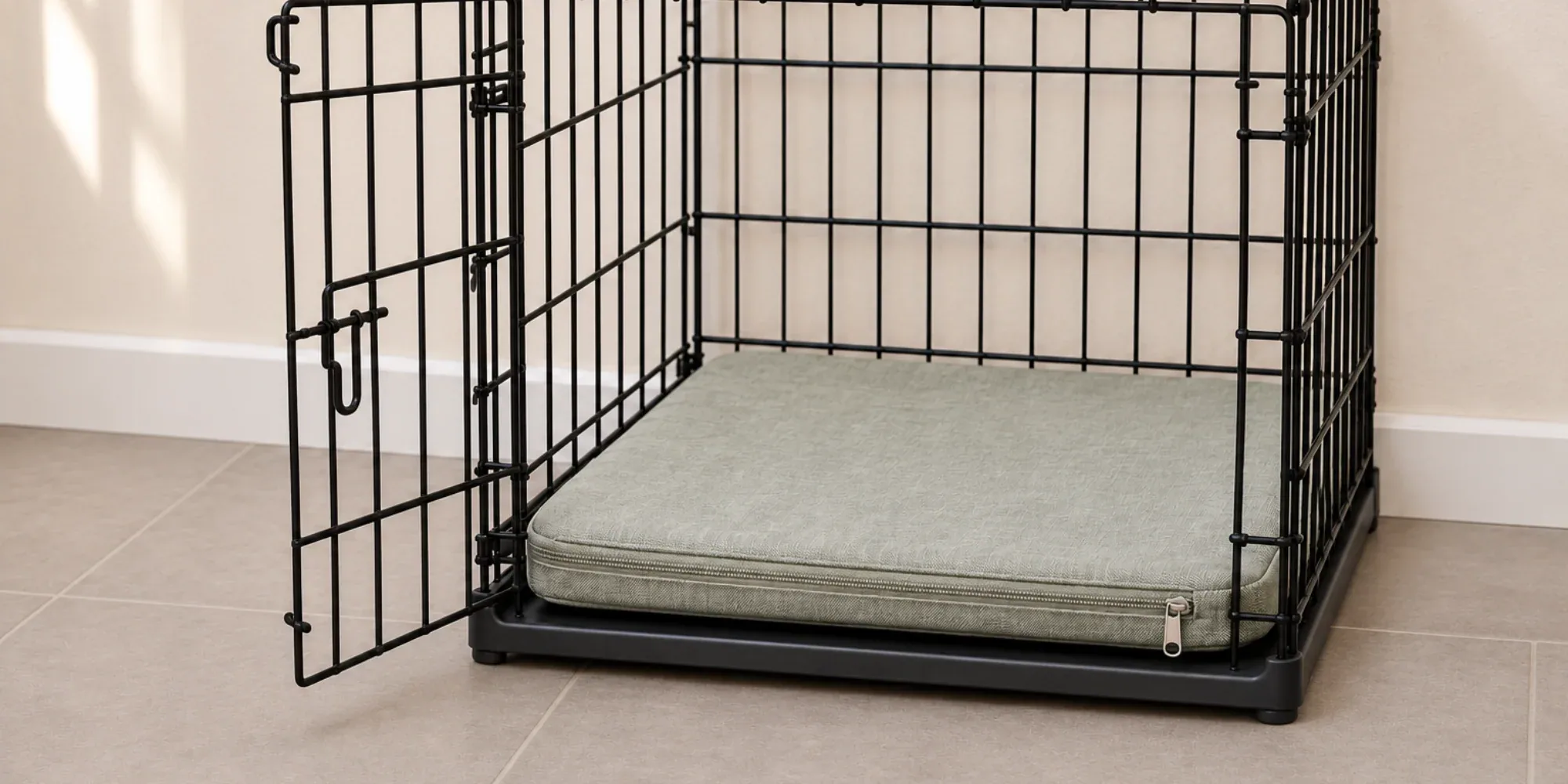
A crate bed must match the interior dimensions of the crate pan without bunching against the sides, leaving enough headroom for the puppy to stand comfortably. Because puppies are prone to accidents, choose a bed with a wide zipper opening that allows you to easily remove and reassemble the cover. Expect to replace the initial bed at least once; puppies will quickly outgrow their first crate, and their chewing and scratching behavior often compromises the bed's materials before they reach adulthood.
Measuring the Crate Pan for an Exact Fit
The exterior dimensions printed on a dog crate box rarely reflect the usable space inside, making them an unreliable guide for selecting a bed. When sizing a bed for a new puppy, the measurement that matters most is the interior pan or tray. Wire crates have internal wire folds, structural clips, and locking mechanisms that intrude into the usable space. Molded plastic travel crates often feature heavily tapered walls, internal support ridges, and rounded corners that reduce the actual floor area even further. Relying on the exterior footprint often results in purchasing a bed that is one to two inches too wide or long for the available sleeping surface.
To find the accurate dimensions, remove the plastic or metal pan completely from the crate if possible, laying it flat on the floor. Measure directly across the interior from wall to wall, capturing the maximum length and width. While a foam bed must rest heavily on the flat portion of the pan to sit level and provide predictable support for the puppy's developing joints, you do not need to strictly exclude sloped edges. Standard flexible foam beds safely compress slightly at the edges to fill the pan. This accommodates curved corners without warping, preventing the dangerous perimeter gaps that occur if a bed is overly restricted to the flat center.
Owners sometimes buy a slightly oversized bed, assuming the extra material will simply squish against the sides for added comfort. In practice, a bed that is too large for the pan will bunch up and ride up the crate walls. This distortion bends the internal foam, compromising the flat sleeping surface and forcing the puppy to lie on an uneven, unsupported slope that can strain their resting posture. Furthermore, the bunched fabric creates a prominent ridge or fold that naturally attracts a bored puppy's attention, giving their teeth an easy, elevated access point to begin chewing or tearing the cover.
Conversely, undersizing the bed introduces entirely different functional problems. A bed that is significantly smaller than the pan will slide across the smooth plastic tray whenever the puppy circles, digs, or plops down to rest. While some beds feature gripped bottoms, these materials rely on weight and surface area to work; a bed with too much clearance will still shift under the momentum of an active puppy. This sliding movement can startle a nervous dog and make them hesitant to enter the crate. Large gaps between the edge of the bed and the crate wall also expose the hard pan, which can trap a small paw when the puppy stretches during sleep.
The style of the bed also dictates how critically you must evaluate the crate's interior shape. A simple, flat rectangular pad usually requires an exact match to the floor pan. However, if you are selecting a product with raised edges or soft bolsters designed for nesting, you must account for how those boundaries interact with the vertical crate walls. While soft bolsters can compress slightly against wire mesh, rigid or overstuffed edges that press tightly against the sides will drastically reduce the internal sleeping area. Ensure the central flat cushion remains wide enough for the puppy to stretch out fully on their side without spilling over. For company-specific information, see Lincellipet.
Another practical measurement check involves evaluating the crate door's clearance. Before finalizing a bed choice, observe how the door operates and how low it sits relative to the pan. Wire crate doors typically swing outward or slide upwards. If the bed is too thick or fits so tightly that it pushes up near the entrance, it will obstruct the bottom latch mechanisms or the door's outward sweep. The bed must clear the entire path of the door and remain completely flat when the crate is securely latched, ensuring the cover does not catch in the hardware.
Balancing Foam Thickness with Headroom
While matching the flat floor dimensions of the crate pan prevents sliding and bunching, the vertical dimension of the bed is equally critical. A crate bed must offer adequate cushioning without stealing necessary headroom. Puppies use their crates as a secure environment where they can sit upright, stretch, and turn around comfortably before finally settling down to sleep. Every inch of foam directly subtracts from the interior height of the crate. If the bed is too thick, a growing puppy will quickly find themselves brushing against the wire ceiling. Constantly ducking to avoid the top of the crate can discourage the puppy from entering their enclosure and disrupt their natural resting postures, making crate training significantly more difficult.
To maintain enough vertical clearance, owners must carefully balance the overall thickness of the bed with the structural properties of its filling. A thicker bed does not automatically provide better comfort or support. A massive, overstuffed loose-fill cushion often compresses unevenly under the puppy's weight, creating unstable pockets that make it difficult for the dog to balance while standing or turning. Instead of relying purely on volume, look for dense, structured materials that deliver firm support at a much lower profile. Flexible foam is a standard material because it isolates the dog's joints from the hard plastic pan without requiring six inches of loft that would otherwise consume valuable space.
When evaluating foam inserts, the physical properties of the material determine whether a thinner bed can successfully support the dog's weight over time. The structural integrity of these materials can be formally measured; established technical guidelines detail testing for physical property and environmental criteria in flexible polyurethane foam for furniture and bedding applications. A high-density foam core resists bottoming out, meaning the puppy will not sink all the way through the cushion and hit the rigid crate pan underneath. By selecting a high-density, low-profile foam bed, you preserve maximum headroom in the crate while still protecting the puppy's developing joints from the unyielding floor. Technical Guidelines
The impact of bed thickness becomes noticeably more pronounced as the puppy grows. A bed that leaves adequate headroom for an eight-week-old dog might create a severely cramped environment just a few short months later, especially for large breeds experiencing rapid growth spurts. When initially sizing the crate and the bed, observe how much clearance remains between the top of the puppy's head and the ceiling when they are standing naturally. A sensible check is to ensure there are several inches of vertical clearance to safely accommodate future growth. Starting with a thick bed immediately narrows this critical buffer zone, accelerating exactly when the puppy will inevitably outgrow the setup.
The internal structure of specialized beds can also affect how much vertical space they occupy. For example, if you select a layered pet bed designed for a warm environment, you must evaluate how its specific breathable fabrics and internal structures behave inside the crate. Instead of relying on the uncompressed appearance, calculate the vertical clearance based on the bed's compressed height under the dog's weight. As soon as the puppy steps onto the bed, their paws instantly compress the materials beneath them. You should evaluate how much headroom remains when the dog is actively standing and turning on this compressed surface. A deeply sinking bed might technically leave enough headroom, but it forces the puppy to trudge through unstable fabric just to settle down. For company-specific information, see Lincellipet.
In molded plastic travel crates, the headroom issue is further compounded by the enclosure's structural design. Many plastic kennels feature sloping ceilings or thick internal ridges that hang down into the usable volume. A thick bed elevates the puppy into the narrower upper portion, restricting their ability to turn around without hitting their head against the sloped walls. In wire crates, elevating the puppy too high alters their angle of view, placing their sightline uncomfortably close to horizontal locking bars. Choosing a bed with a moderate, supportive thickness ensures the crate remains a spacious, easily navigable den.
Cover Accessibility for Frequent Washing
Puppy training inevitably involves frequent cleanups. Crate training isolates accidents to the crate pan, making the crate bed the primary recipient of spilled water, urine, and dirt. Because owners must frequently strip and wash the bed cover, sometimes daily, the physical design of the cover determines whether this task is a brief chore or a frustrating ordeal. A cover that is difficult to remove not only wastes time during late-night cleanups but also jeopardizes the structural integrity of the interior foam over multiple wash cycles.
The primary mechanical barrier to easy removal is the length and placement of the zipper. Many standard pet beds feature a straight zipper along a single short edge. Extracting a foam core through a single-side opening requires the owner to bend, fold, or aggressively squeeze the foam. While high-density memory foam recovers from occasional compression, repeatedly wrestling the foam through a narrow gap tears the cellular structure. If the foam is damp from an accident that breached the cover, it becomes even heavier and more susceptible to ripping when pulled.
A more practical design utilizes a zipper that spans at least two sides of the crate bed, typically in an L-shape along one long edge and one short edge. An optimal configuration is a U-shaped zipper traversing three sides. This wide-opening geometry transforms the cover into a flap or clamshell. Instead of pulling the foam out of a tight envelope, the owner can simply fold back the fabric and lift the foam core straight up. When evaluating a bed for a puppy crate, physically unzip the cover to observe whether it allows the foam to remain completely flat during removal.
- Zipper span: Confirm that the zipper travels around at least two adjacent corners to allow flat foam removal without bending.
- Hardware position: Verify that the zipper track is located on the bottom perimeter or underneath the bed rather than along the upper edge where liquids naturally pool.
- Placket protection: Look for a strip of fabric covering the closed zipper teeth, which deflects liquid spills and hides the metal pull tab from a teething puppy.
- Liner accessibility: If the foam is wrapped in a secondary waterproof liner, check if that liner also features a zipper, permitting the foam to breathe or be spot-cleaned if odors penetrate the outer layers.
Reassembling the bed after washing presents a different set of mechanical challenges that directly affect how the bed fits inside the crate. When a cover has a restrictive opening, forcing the foam back inside causes the fabric to drag and bunch. If the cover does not lay perfectly smooth across the foam core, the bed loses its sharp, squared corners. A misshapen bed will not sit flush against the rigid walls of the crate pan. Instead, bunched fabric creates rounded edges and gaps around the perimeter. These gaps become hazard zones where a puppy can wedge its paws, and loose folds of fabric invite digging and chewing behaviors that accelerate the need for a total bed replacement.
Finally, the owner must account for fabric shrinkage when planning the washing routine. Removing odors and sanitizing a soiled crate bed often requires warm water or machine drying. However, exposing the cover to high heat can shrink the fabric. When a cover shrinks, it tightens around the foam core, forcing the edges of the bed to curl upward into a bowl shape. This curling reduces the effective sleeping surface area and completely alters the bed footprint, compromising the exact fit calculated during the initial crate measurement. To maintain the necessary dimensions for the life of the bed, select covers made from pre-shrunk materials, or commit to a strict maintenance routine of cold-water washing and air-drying to preserve the cover tolerances.
Material Resistance to Puppy Scratching and Wear
Puppies instinctively engage in nesting behaviors before they settle down to sleep. This ritual typically involves vigorous digging, circling, and scratching at the surface of their resting area. Inside the confined space of a crate, the bed cover bears the entire brunt of this localized, repetitive stress. A standard woven fabric intended for a human pillow or a gentle adult dog will rapidly deteriorate under a puppy's claws. To survive the initial months of crate training, the bed's outer cover must possess specific material properties that resist surface wear and structural tearing.
The primary threat from digging is surface abrasion. As a puppy repeatedly scrapes its claws across the same patch, the friction wears away the textile fibers. The fabric's ability to endure this rubbing without losing structural integrity is evaluated through abrasion resistance testing. Standardized procedures determine the abrasion resistance of textile fabrics using tools like the rotary platform abrader, which subjects the material to mechanical rubbing to measure degradation. A cover with high abrasion resistance prevents the fabric from thinning out prematurely. It remains smooth rather than developing rough patches or pills that attract a bored puppy's attention and invite destructive chewing. D3884 Standard Guide for Abrasion Resistance of Textile Fabrics (Rotary Platform Abrader Method)
Beyond scratching, puppies frequently bite, pull, and tug at the bed cover, especially if they locate a loose fold or bunched corner. This pulling action introduces significant tensile stress. If the puppy secures a grip, the fabric must withstand the pulling force without ripping apart. The breaking strength of a fabric dictates its capacity to endure this tension. Standard grab test procedures evaluate the breaking strength and elongation of most textile fabrics by mechanically pulling the material until it ruptures. When a bed cover features high breaking strength, it is far less likely to suffer a catastrophic tear if the puppy catches a claw in the weave or yanks on a corner with its teeth. D5034 Standard Test Method for Breaking Strength and Elongation of Textile Fabrics (Grab Test)
The durability of the fabric must be matched by the construction of the bed's seams. The strongest textile will fail if the thread connecting the panels snaps under pressure. Seams are naturally elevated and often become the primary target for a chewing puppy. Crate beds that utilize heavy-duty thread, hidden seams, or double-stitched perimeters reduce the puppy's ability to hook a tooth or claw under the fabric joint. Furthermore, any waterproof backing applied to the underside of the cover relies entirely on the top layer's abrasion resistance. If the top fibers wear away, the waterproof barrier becomes exposed to direct scratching and will quickly fail, leaving the interior foam vulnerable to accidents.
Despite relying on robust materials, owners must recognize a practical reality: no fabric is entirely chew-proof against a determined puppy. A dog's teeth function like shears, cutting through fibers rather than wearing them down through friction. Heavy-duty covers are designed to withstand routine nesting and provide the necessary time for an owner to correct destructive behavior, but they cannot serve as indestructible chew toys during prolonged periods of unmonitored boredom.
Because material degradation is inevitable over time, owners must frequently assess the condition of the crate bed. The washing routine provides an ideal opportunity to inspect the cover for signs of structural failure. Identifying weak points early allows the owner to plan for a replacement before a minor tear becomes a serious ingestion hazard.
- Inspect the center of the bed for thinned, nearly translucent patches caused by repetitive nesting circles and scratching.
- Check the corners, edges, and zipper plackets for pulled threads or frayed fabric that might tempt a teething puppy.
- Examine the underside of the cover to ensure the internal waterproof backing is not cracking or flaking away from prolonged friction.
Understanding the limits of fabric durability helps owners set realistic expectations for the lifespan of a puppy crate bed. By prioritizing materials that resist localized abrasion and withstand tensile stress, you can delay the inevitable damage caused by instinctive nesting behaviors. However, as the puppy gains weight, jaw strength, and larger claws, the daily physical demands on the bed will steadily increase. This intensifying wear ultimately necessitates a planned transition to a fresh bed.
Planning for Growth and Bed Replacements
When preparing for a new puppy, owners often assume that a crate bed will last for the dog's entire life. In reality, the first bed is a temporary training tool. The inevitable physical growth of the dog, combined with the daily structural wear from nesting behaviors and accidents, guarantees that the initial bed will eventually require replacement.
The most obvious trigger for replacement is the puppy outgrowing the crate's footprint. As the dog lengthens and gains height, a crate that once offered a spacious den becomes a restrictive enclosure. If the puppy can no longer stretch out fully on their side without their paws pressing against the walls, the crate itself must be upsized. Consequently, the carefully measured puppy bed will no longer match the new, larger interior pan, leading to shifting and sliding that creates an unstable resting surface.
Beyond external dimensions, the dog's increasing body weight dramatically alters how the bed's interior foam functions. Flexible foam provides support by pushing back against the load placed upon it. A foam density optimized to gently cushion a ten-pound puppy will often compress completely under the localized weight of a fifty-pound adolescent. When a bed bottoms out, the heavier dog sinks through the cushioning, resting their weight directly against the hard plastic pan and defeating the bed's primary purpose.
This loss of support becomes a critical consideration for the dog's physical health, particularly as they mature. Daily wear and tear on a dog's joints can lead to the development of osteoarthritis. This condition is not limited to senior pets; young large breed dogs with developmental bone disease are commonly affected by osteoarthritis, alongside older, overweight large breed dogs. As their bodies undergo rapid physical changes, these growing dogs require consistent, reliable joint isolation from hard floors. Osteoarthritis in Dogs – American College of Veterinary Surgeons
Because large breeds are vulnerable to joint stress, proactive owners should plan to upgrade the crate bed's orthopedic support before the dog reaches adulthood. Relying on a flattened, heavily soiled puppy bed forces the adolescent dog to rest their hips and elbows on an unyielding surface. A replacement bed for a maturing dog should feature a higher-density foam core specifically engineered to handle their adult weight without collapsing, ensuring their joints remain elevated above the crate tray during prolonged confinement.
- Pressing a hand firmly into the center of the bed easily reaches the hard floor underneath.
- The dog's limbs consistently hang off the edge of the mattress when they attempt to sleep.
- The fabric cover exhibits unrepairable tears, broken zipper tracks, or persistent odors.
- The dog hesitates to enter the crate, suggesting discomfort with the resting surface.
Understanding this eventual need for replacement allows owners to allocate their budget sensibly. It is generally impractical to invest heavily in an expensive, adult-sized orthopedic bed while the dog is still a puppy. A large bed squeezed into a small crate will warp, and a puppy's teething and frequent accidents will quickly degrade premium materials. Instead, purchase a moderately priced, exactly fitted bed for the puppy phase, and plan to invest in a durable, high-density adult bed only after the dog has reached their mature size and outgrown destructive behaviors.
Sources
- Technical Guidelines — 2025-03-31
- D3884 Standard Guide for Abrasion Resistance of Textile Fabrics (Rotary Platform Abrader Method)
- D5034 Standard Test Method for Breaking Strength and Elongation of Textile Fabrics (Grab Test)
- Osteoarthritis in Dogs – American College of Veterinary Surgeons
- Canine Arthritis Resources & Education | Dog arthritis tips and resources
