 跳到内容

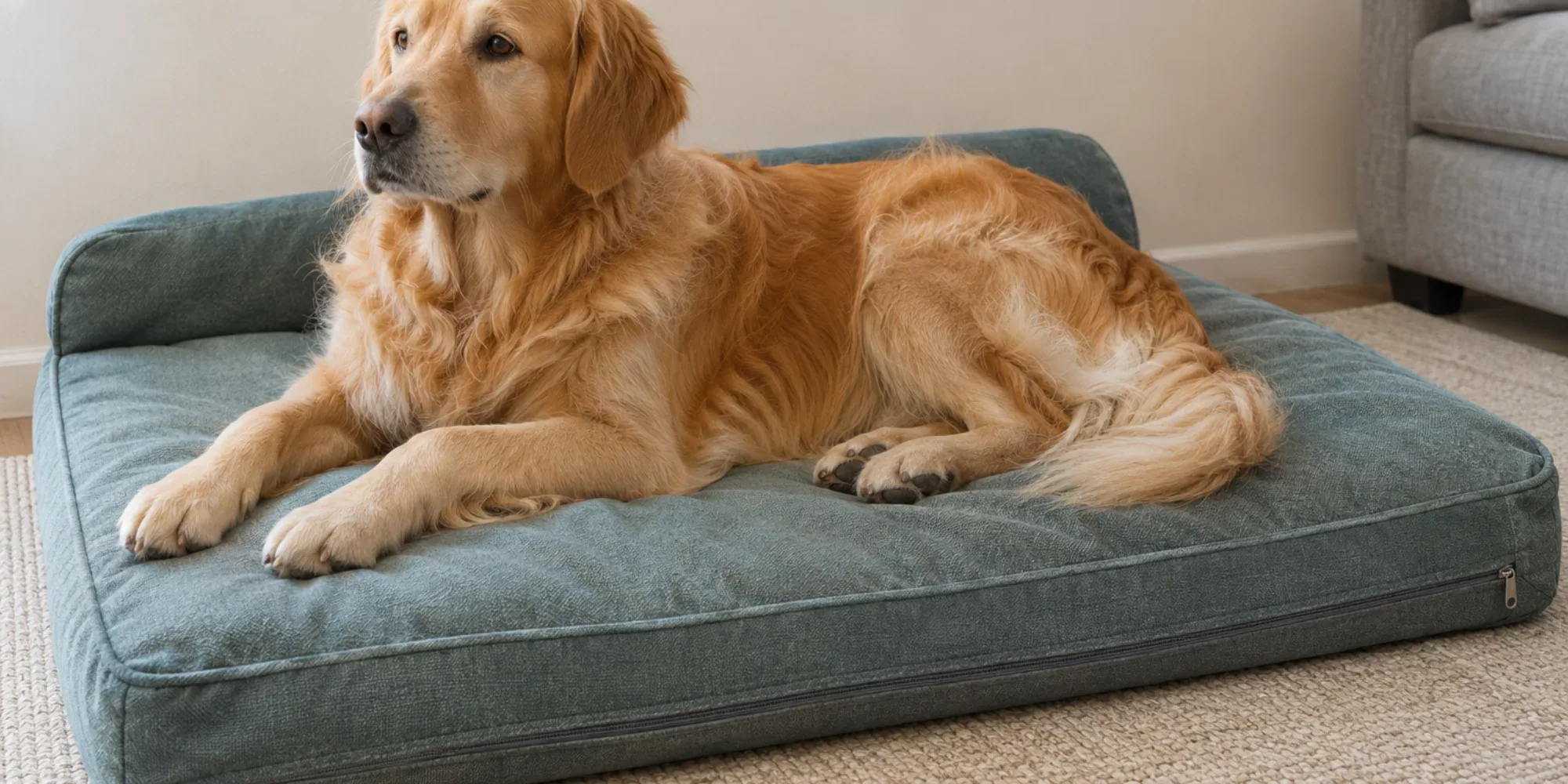
For a Golden Retriever, a bed needs enough usable flat space for a 65–75 pound dog to fully stretch out without their joints hanging off the edge. Choose a supportive orthopedic foam base capable of bearing their weight to reduce joint strain. The cover must be highly durable to handle their movement and resting weight, and fully removable so you can wash it frequently while keeping the interior foam dry and protected.
Measuring Usable Space for Large Breed Sleeping Extensions
Golden Retrievers typically weigh between 65 and 75 pounds and have long limbs that require significant space when fully extended. When resting, these dogs frequently adopt a sprawled position, lying on their sides with their front and back legs stretched straight out. This posture helps them dissipate heat and relieves pressure on their spine and major joints. To accommodate this sleeping style, a dog bed must offer a substantial flat surface area. If the bed is too small, the dog is forced to compromise their posture, either by curling up tightly for extended periods or by letting their heavy limbs drape over the side of the mattress onto the hard floor.
A common mistake when selecting a bed is relying solely on the manufacturer stated exterior dimensions. Many large beds incorporate decorative borders, elevated bolsters, or heavily stuffed sidewalls. While a bed might be marketed as 45 inches long, a five inch bolster on each side reduces the actual flat sleeping surface to just 35 inches. For a fully grown Golden Retriever, this difference dictates whether the bed functions as a comfortable supportive platform or an awkward obstacle. The usable space is exclusively the flat, unbolstered central foam where the dog can rest without their body resting at an uneven tilt.
- Wait until your dog is deeply asleep on their side in a fully extended position.
- Measure the length from the tip of their nose, or front paws if extended further, to the tips of their fully extended hind paws to capture the true length of a sprawled dog.
- Measure the distance from their back, along the spine, to the tips of their fully extended paws to establish the accurate cross-sectional width required.
- Add four to six inches to both the length and width measurements to account for movement, shifting, and stretching during the night.
Once you have these minimum usable space dimensions, compare them strictly against the interior sleeping area of any potential bed. If the usable flat space falls short of your measurements, the dog will experience joint overhang. Joint overhang occurs when the dog rests their torso on the elevated foam but their elbows, hips, or knees hang off the edge, leaving those joints suspended or resting directly on the hard floor. This creates a fulcrum effect at the edge of the bed, placing concentrated pressure on the specific joints that bear the weight of the overhanging limbs. Over time, this uneven weight distribution defeats the purpose of providing an orthopedic surface.
Preventing this uneven joint load is particularly vital for large breeds. Daily wear and tear on the joints drives the development of osteoarthritis in dogs that have no other inciting causes. This joint degradation frequently impacts older, overweight large breeds as well as young large dogs managing developmental bone disease. By ensuring the bed provides enough continuous flat space to keep every joint fully supported on the yielding foam, you prevent the unnatural angles and hard surface impacts that contribute to daily joint stress. Osteoarthritis in Dogs – American College of Veterinary Surgeons
Beyond joint health, adequate usable space affects whether the dog will actually use the bed consistently. Golden Retrievers have dense double coats and often shift positions to regulate their body temperature. They might start the night curled into a tight ball, a position that retains heat, but later stretch out entirely to cool down. If the usable flat space only accommodates their curled position, the dog will inevitably abandon the bed for the cooler, harder floor when they need to stretch. A bed with sufficient flat space allows them to transition through all their natural resting postures without losing orthopedic support or comfort.
When evaluating bolster beds versus traditional flat mattress styles, consider how your specific dog interacts with raised edges. Some Golden Retrievers use bolsters as chin rests, which can align their spine comfortably. However, the bolster itself does not count toward the usable sleeping surface for the dog's heavy torso and limbs. If you opt for a bolstered design, you must size up significantly to ensure the central flat cushion still meets the minimum length and width requirements you measured. A flat, rectangular orthopedic mattress often provides the most efficient ratio of usable space to total floor footprint, making it easier to fit into a room while still fully supporting a large breed dog.
Ultimately, measuring for usable space is about aligning the physical product with the mechanical needs of a large breed dog. The bed serves as a protective buffer between the dog's heavy frame and the unyielding floor. If the dimensions force any major joint off the protective foam, the bed fails its primary orthopedic purpose. Prioritize the flat surface area, account for the full extension of the dog's limbs, and carefully subtract any unusable decorative or bolstered edges from your calculations to secure a bed that will physically support a Golden Retriever throughout their life.
Support Requirements and Foam Density
When a Golden Retriever weighing up to 75 pounds transitions from standing to resting, their entire body weight is briefly concentrated on a few specific joints before they settle. As they lie down, the hips, elbows, and shoulders endure the brunt of this impact. On a bare floor, this creates severe localized pressure. The primary mechanical function of a dog bed is to act as a structural buffer that absorbs this localized pressure and distributes the dog's weight evenly across a broader surface area, thereby minimizing the strain on any single joint.
Managing this daily joint stress becomes increasingly critical as a Golden Retriever ages. Large breeds are highly susceptible to joint wear and the gradual onset of osteoarthritis. Proper management requires recognizing the signs of joint discomfort early and implementing a supportive care routine that limits unnecessary strain. Organizations like Canine Arthritis Resources and Education offer free, expert-developed, evidence-based tools designed to help pet parents and veterinary teams identify, diagnose, and manage canine arthritis effectively. Using these resources guides owners in creating a comprehensive management plan. A foundational element of that management is ensuring a resting surface capable of mitigating the physical stress placed on their skeletal structure. Canine Arthritis Resources & Education | Dog arthritis tips and resources
To provide meaningful relief, the bed must possess a core structure robust enough to support a large breed. Many owners confuse external thickness with supportive capacity. A bed stuffed with loose polyester fiberfill may look plush and measure six inches thick, but this material is mostly trapped air. When a heavy Golden Retriever lies on loose fill, the air is quickly forced out, and the fibers compress flat under their hips and elbows. This phenomenon, known as bottoming out, means the dog is effectively resting on the hard floor with only a thin layer of fabric acting as a barrier. For reliable support, the bed requires a solid core, typically made from structured flexible polyurethane foam.
When evaluating foam cores, it is crucial to understand the distinct roles of foam density and foam firmness. Density measures the actual mass of the polyurethane material per cubic foot, indicating how closely packed the cellular structure is within the foam. It is entirely separate from firmness, which measures how much surface resistance the foam offers when pressed. A high-density foam contains more physical material and less air, making it significantly more resilient under a heavy, sustained load. For a Golden Retriever, a dense foam core is necessary to prevent the material from crushing flat over months of use. Lower-density foams degrade rapidly, losing their ability to rebound and developing permanent sunken craters where the dog typically rests.
Because a Golden Retriever may spend twelve to fourteen hours a day in direct contact with their bed, the physical and environmental properties of the core material should be evaluated. The official technical guidelines for CertiPUR-US certification outline specific testing protocols for evaluating both the physical property and environmental criteria of flexible polyurethane foam used in bedding and furniture. This framework ensures that the foam meets established baselines for durability and composition. Understanding these criteria helps owners select a structural core that maintains its integrity without degrading prematurely under the continuous pressure of a large breed dog. Technical Guidelines
Owners can test a bed's structural integrity using a manual check. Press a closed fist firmly into the center of the foam core, attempting to simulate the concentrated weight of a 70-pound dog's elbow dropping onto the surface. If you can easily push through the foam and feel the floor beneath, the firmness or overall thickness of the bed is insufficient for a Golden Retriever. This test evaluates whether the bed will prevent bottoming out, but it does not measure density. High-density memory foam is excellent for contouring but lacks structural resistance, meaning it will bottom out if used alone without a firmer base. Conversely, low-density foam might initially feel firm enough to stop your fist, but its lack of mass means it will quickly break down. The ideal support foam provides enough pushback to halt the downward progression of your fist before it reaches the bottom, while still yielding slightly at the surface to cradle joints.
To balance this need for yielding comfort and structural resistance, many high-quality orthopedic beds utilize a dual-layer foam construction. The base layer consists of a thick slab of firmer support foam designed to prevent bottoming out and keep the dog elevated. On top of this rigid base sits a thinner layer of memory foam. The memory foam responds to the dog's body heat and weight, contouring to the shape of their protruding joints. This combination distributes the dog's mass over the widest possible area while relying on the bottom layer to bear the total weight without collapsing.
Selecting the right support structure for a Golden Retriever is vital for maintaining their long-term physical mobility. A bed that merely looks soft will not protect their joints from the daily impacts of lying down. Prioritizing a structured, suitably firm foam base that is thick enough to prevent bottoming out ensures the dog receives functional orthopedic support, mitigating the physical toll of their heavy frame and promoting comfortable rest.
Cover Fabric Selection: Durability and Wear Resistance
A 65 to 75-pound Golden Retriever exerts considerable physical force on a dog bed cover every time they lie down, stand up, or adjust their position. Unlike smaller breeds that rest lightly on the surface, a large dog creates concentrated pressure points under their paws. As they step onto the bed, the cover fabric is pulled taut across the underlying foam base. If the material is too weak, this repetitive stretching will eventually cause the fabric fibers to yield, resulting in tears or structural failure. Selecting a durable cover requires looking beyond aesthetic patterns to evaluate the material's mechanical properties, specifically focusing on its capacity to withstand constant tension and localized friction over the entire lifespan of the bed.
The ability of a fabric to resist tearing under active tension is evaluated through its breaking strength. When a heavy Golden Retriever drops their entire body weight onto the mattress, they create extreme, localized tension that pulls the fabric tightly in a straight line beneath them. Standardized testing protocols utilize specific grab test procedures for determining the breaking strength and elongation of textile fabrics, measuring the maximum uniaxial pulling force the material can endure before the woven fibers snap apart. A high breaking strength ensures that the cover will not easily split when subjected to this sudden, heavy load. If a bed cover lacks adequate breaking strength, owners will frequently notice stress tears developing near the center of the bed or along the primary structural seams where the tension caused by the dog's weight is highest. D5034 Standard Test Method for Breaking Strength and Elongation of Textile Fabrics (Grab Test)
Beyond sheer weight, Golden Retrievers frequently engage in distinct nesting behaviors, which involve digging, scratching, or aggressively pawing at their sleeping surface before they finally lie down. This repetitive mechanical action acts much like coarse sandpaper rubbing against the cover. To survive this daily behavior, the chosen fabric must possess exceptionally high abrasion resistance. In laboratory settings, the determination of the abrasion resistance of textile fabrics is often executed using a rotary platform abrader, a device that effectively simulates the repetitive, grinding friction of claws and rough paw pads scraping across the material over time. Fabrics that perform well under this specific type of abrasion testing maintain their structural integrity and smooth surface appearance even after hundreds of aggressive scraping cycles. D3884 Standard Guide for Abrasion Resistance of Textile Fabrics (Rotary Platform Abrader Method)
When evaluating cover materials, owners face a practical tradeoff between extreme durability and soft texture. Tightly woven fabrics, such as heavy-duty polyester blends or treated canvas, offer excellent abrasion resistance and breaking strength. The dense weave leaves little room for a claw to catch a thread during nesting. However, these materials can feel stiff and generate noise when the dog moves, which might deter sensitive pets from using the bed. Conversely, plush materials and synthetic fleece are highly preferred for their soft, insulating properties, but they generally exhibit much lower abrasion resistance and are far more susceptible to matting, thinning, and thread-pulling under the constant friction of heavy paws.
For those seeking maximum usable space and structural durability, accommodating a Golden Retriever sometimes involves scaling up the resting area entirely. Some households opt for oversized lounge formats, such as a Custom Foldable Human Dog Bed, which provides an expansive resting space that allows the dog to stretch out fully without any limb overhang. In these much larger formats, the cover fabric must meet even higher durability thresholds because it is often subjected to the combined weight and friction of both the large breed dog and human occupants sharing the space. Regardless of the bed's exact dimensions, any cover expected to bear this heavy level of daily traffic must utilize upholstery-grade or similarly robust textiles to prevent premature wear and stretching. For company-specific information, see Lincellipet.
A dog bed cover is ultimately only as durable as its weakest structural point, which is almost always the stitching. Even if the primary textile features exceptional breaking strength and high abrasion resistance, weak seams will quickly unravel under the stress of a Golden Retriever's shifting weight. Large breed beds require heavy-duty thread and reinforced stitching techniques, such as double-stitched or overlocked seams, to distribute the tensile stress evenly across the panels. Additionally, functional hardware like zippers must be strategically placed and protected. Concealed zippers, hidden beneath heavy fabric flaps or positioned safely on the bottom perimeter of the bed, prevent the dog from chewing on the metal hardware or snagging it with their claws during their scratching routines.
For an owner evaluating a bed without laboratory data, practical visual and tactile checks can indicate whether a cover suits a Golden Retriever. Examine the fabric weave; a denser weave generally indicates better resistance to snagging and abrasion. Pull gently on the seams to see if the stitching holds firm without exposing gaps. If the material feels thin enough to easily stretch by hand, it is unlikely to survive a seventy-five-pound dog. Opting for a heavier, reinforced cover initially prevents constant replacements over the life of the bed. Understanding these physical demands helps you select a lasting protective barrier.
Care Routines and Washable Maintenance
Golden Retrievers are highly active, double-coated dogs known for their affinity for water, mud, and outdoor exploration. Consequently, they bring environmental debris, loose hair, and natural oils directly into their resting space after walks. Because a large dog spends many hours sleeping, this accumulation of organic matter happens rapidly and penetrates into the fabric. If left unmanaged, the bed quickly becomes unhygienic, developing strong odors and harboring bacteria. Establishing a rigorous care routine is a structural necessity for extending the functional life of the bed and ensuring the sleeping environment remains sanitary.
The most critical vulnerability of any dog bed is its internal core. Flexible polyurethane foam and memory foam provide the essential orthopedic support for a heavy breed, but they require strict moisture management. When exposed to moisture, flexible polyurethane foam undergoes a process called hydrolysis, where water chemically degrades the material's structural integrity over time. This chemical breakdown causes the foam to lose its resilience and supportive capacity, eventually leading to permanent sagging. Furthermore, the high density of an orthopedic slab restricts internal airflow. When water, saliva, or urine soaks deep into the foam, the moisture becomes trapped. If left unresolved, it not only accelerates this structural breakdown but also creates an ideal damp environment for the rapid growth of mold, mildew, and persistent odors. Therefore, preventing moisture from reaching the core is paramount. If the foam does get soaked, you must act quickly to salvage it by gently pressing out the liquid—avoiding harsh wringing motions that could tear it—and allowing the core to air-dry completely in a highly ventilated area to minimize the duration of moisture exposure.
To protect this internal structure and simplify maintenance, the bed must feature a fully removable cover. Spot cleaning with a damp cloth is entirely insufficient for the volume of dirt a seventy-pound dog tracks indoors. The entire outer textile must be capable of surviving a washing machine cycle. A thoughtfully designed Custom Orthopedic Memory Foam Dog Bed relies on a completely separable cover that zips off easily, allowing owners to thoroughly wash the fabric while the foam remains dry and protected elsewhere. Covers that are sewn shut or rely on loose internal stuffing that must be washed alongside the fabric often clump and lose their shape, rendering the resting surface uneven and uncomfortable for a large dog. For company-specific information, see Lincellipet.
When washing the outer cover, temperature control is paramount. Always use cold or lukewarm water and a mild detergent rather than hot water. Many heavy-duty fabrics and non-slip rubberized bottoms are constructed from synthetic materials that warp or degrade under high temperatures. More importantly, hot water and high-heat drying cycles frequently cause the woven fabric to shrink. Because a structured foam core retains its exact original dimensions, a shrunken cover will no longer fit properly. Trying to force a shrunken, tight cover back over a thick foam slab puts immense tension on the seams and zippers, often resulting in immediate structural failure when the dog steps on it. Air drying the cover or using an unheated tumble setting prevents this shrinkage and preserves zipper integrity.
Before placing the cover in the washing machine, it is essential to manage the loose hair. Golden Retrievers possess a dense double coat that sheds profusely year-round, leaving a persistent layer of fur pressed into their sleeping surface. If a heavily hair-covered bed is thrown directly into the wash, the wet fur will clump together, potentially clogging your plumbing or baking into the fabric fibers permanently during the drying process. Owners should thoroughly vacuum the bed using an upholstery attachment or use a rubber squeegee tool to systematically lift embedded hairs from the cover before unzipping it. This preliminary step significantly improves the effectiveness of the washing machine's agitation cycle, ensures detergent can actually penetrate the soiled textile, and protects household appliances from accumulated debris.
Managing the daily realities of life with a large, shedding breed can be challenging. Dog owners frequently turn to pet-oriented social networks, where they focus on their relationship with their pets and actively look for advice. The more people I meet, the more I like my dog: A study of pet-oriented social networks on the Web | First Monday
Separate from these study findings on relationship-building, many online communities also serve as informal forums where owners independently exchange peer-tested tips for tackling tough household stains or neutralizing pet odors. While these crowd-sourced tips are helpful for surface cleaning, the fundamental rule for long-term bed maintenance remains mechanical: effectively separate the soiled textile from the structural support before cleaning. By adhering to a strict regimen of pre-vacuuming, cold-water washing, and promptly air-drying any moisture that reaches the foam, owners ensure the bed continues to perform its vital orthopedic function throughout the dog's life.
Sources
- Osteoarthritis in Dogs – American College of Veterinary Surgeons
- Canine Arthritis Resources & Education | Dog arthritis tips and resources
- Technical Guidelines — 2025-03-31
- D5034 Standard Test Method for Breaking Strength and Elongation of Textile Fabrics (Grab Test)
- D3884 Standard Guide for Abrasion Resistance of Textile Fabrics (Rotary Platform Abrader Method)
- The more people I meet, the more I like my dog: A study of pet-oriented social networks on the Web | First Monday
