 跳到内容

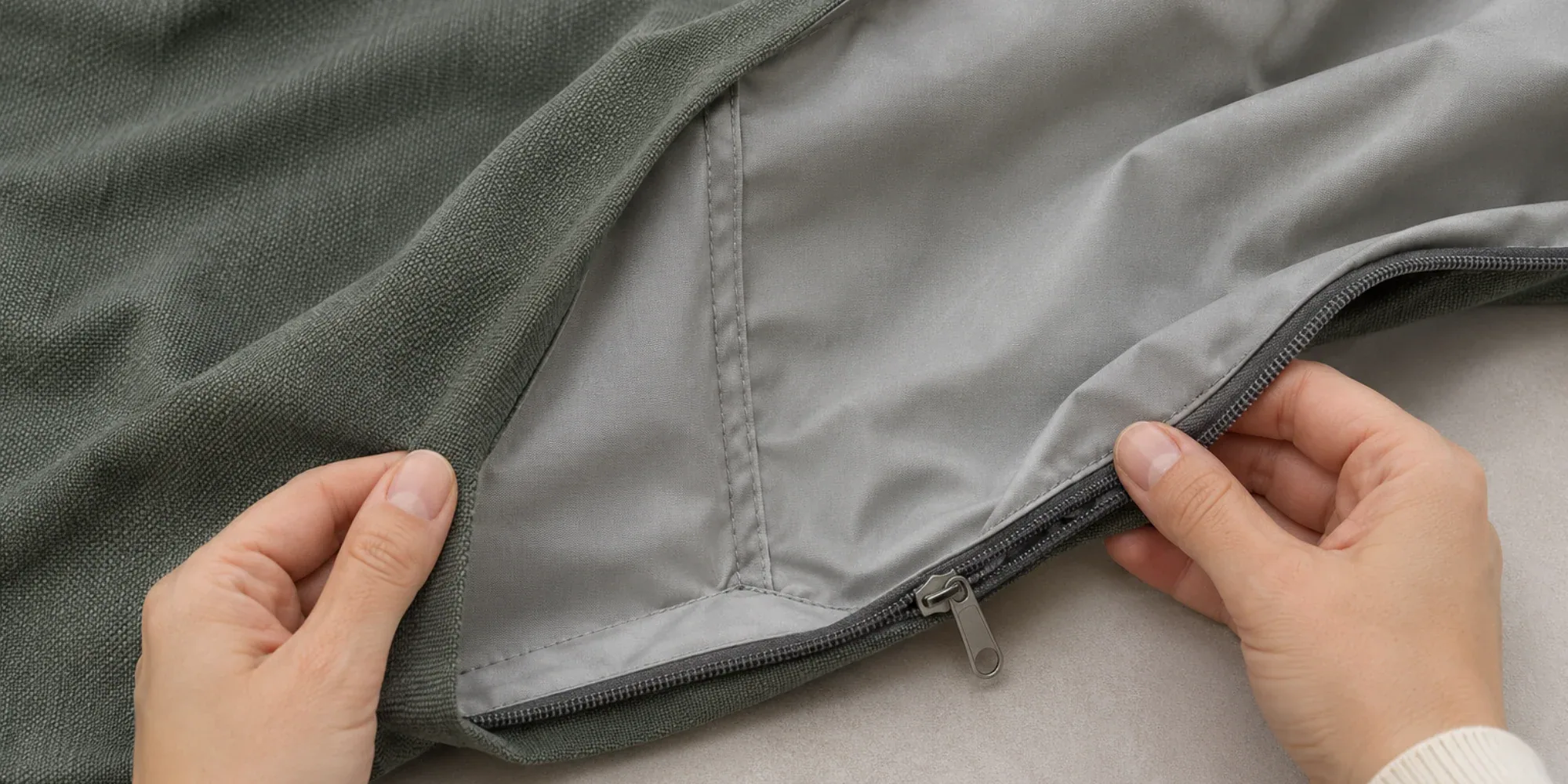
A dog bed cover is only truly waterproof if its fabric, seams, and zippers all block moisture. This requires specifying an impermeable barrier like a TPU backing, taped or welded seams rather than standard stitched seams, and shielded or water-resistant zippers. Evaluating the cover means checking that the outer textile can withstand abrasion and tearing without compromising the inner waterproof layer.
The Anatomy of a Waterproof Dog Bed Cover
Specifying a waterproof dog bed cover requires evaluating the outer shell as a single, interconnected moisture barrier. Water reliably follows the path of least resistance, meaning that a highly rated waterproof fabric cannot protect the inner foam if the seams or zippers allow moisture to pass through. When developing a Custom Orthopedic Memory Foam Dog Bed, buyers must recognize that the cover is an integrated assembly. A failure in any one of these three components compromises the entire product and allows urine, saliva, or wet paw runoff to reach the vulnerable core. For company-specific information, see Lincellipet.
The foundation of this system is the fabric itself, which typically relies on a durable inner coating or laminated membrane to physically block liquid. Surface treatments that make water bead up temporarily are insufficient for pet products, as heavy pressure from a resting dog will eventually force standing liquid through standard woven textiles. Product developers must specify an impermeable backing layer that spans the entire surface area of the cover without degrading under the animal's weight.
Joining these waterproof fabric panels introduces the next critical vulnerability. Standard sewing machines punch thousands of holes through the impermeable backing. If left untreated, these needle holes become direct channels for liquid ingress, drawing moisture inward through capillary action. To maintain the continuous barrier, quality controllers must check that all joining seams are securely sealed. This is typically achieved using heat-applied waterproof tape over the stitches or by employing high-frequency welding, replacing stitched gaps with a completely closed, leak-resistant bond.
The final structural gap in the assembly is the closure system. Standard nylon coil zippers absorb moisture along their fabric tapes and allow liquid to slip directly between the teeth. To properly seal this opening, the zipper must either feature a water-resistant shielded chain or be heavily protected by an overlapping waterproof fabric flap. This closure evaluation is particularly important for large-format designs, such as a Custom Foldable Human Dog Bed, where extended zipper lengths create a significantly larger surface area exposed to potential spills, wet paws, or accidents. For company-specific information, see Lincellipet.
When evaluating supplier samples, buyers should physically inspect the cover inside out to verify the complete assembly. The inner surface will immediately reveal whether the fabric backing is continuous, whether the seams feature correctly applied sealing tape, and whether the zipper includes a protective barrier. Because dogs frequently scratch, dig, and stretch the fabric before resting, this integrated barrier must also survive significant mechanical stress. Overlooking a weak seam seal or an exposed zipper tape means the cover will ultimately fail, rendering the fabric's initial waterproof rating completely irrelevant.
Fabric Checks: Backings, Coatings, and Moisture Barriers
Evaluating a dog bed cover begins with distinguishing between temporary water resistance and a permanent moisture barrier. Many fabrics marketed for pets feature a durable water repellent surface treatment. This chemical coating causes liquids to bead up and roll off, which is highly effective for quickly wiping away minor spills before they soak in. However, surface repellency is insufficient for continuous protection. When a heavy dog lies on top of an uncleaned accident, their body weight generates significant hydrostatic pressure. This downward force physically pushes standing liquid through the microscopic gaps between woven textile threads. To ensure a cover is genuinely waterproof, product developers must specify a continuous, non-porous physical barrier rather than relying solely on face treatments.
The most reliable method for creating this physical barrier is applying a thermoplastic polyurethane or polyvinyl chloride backing to the reverse side of the main textile. When evaluating fabric samples from a supplier, quality controllers should turn the material over and inspect the interior surface. A standard woven fabric looks structurally similar on both sides, with individual threads clearly visible. In contrast, a correctly backed waterproof fabric features a distinct, solid film permanently bonded to the interior face. This applied backing should feel slightly rubbery or smooth and must completely obscure the weave of the outer textile. If inspecting an opaque coating, light passing through the pores when held up to a bright bulb indicates the material lacks a continuous impermeable layer. However, this check is only applicable to solid colors; clear and translucent laminates naturally transmit light through the weave without compromising the moisture barrier.
In technical specifications, the performance of these backings is measured through hydrostatic head testing, which determines how much liquid pressure a fabric can withstand before moisture penetrates the barrier. For dog beds, the required resistance depends heavily on the intended user. A small terrier generates far less concentrated pressure than a large mastiff. While lightweight pet apparel might succeed with lower waterproof ratings, a heavy-duty dog bed cover requires a significantly higher pressure threshold to prevent standing urine from soaking through when a heavy animal sleeps in the same position for hours.
Buyers can perform a practical assessment of this barrier without specialized laboratory equipment. To test a fabric sample, create a pool of water on the outer face, place a dry paper towel directly underneath, and apply sustained, firm pressure over the wet spot using a heavy object or the heel of your hand for several minutes. If the paper towel shows any dampness, the backing has failed. This physical pressure check mimics the conditions of a large, resting dog and quickly reveals whether the barrier handles real-world mechanical stress.
Specifying a thick, non-porous backing introduces a necessary design trade-off regarding airflow. A truly waterproof fabric prevents air from escaping just as effectively as it blocks liquid from entering. If a pet bed is encased entirely in a heavily backed waterproof material, the inner foam will struggle to compress when the dog steps onto the cushion, creating an uncomfortable ballooning effect. Furthermore, this trapped air prevents the foam core from recovering its original shape efficiently once the dog leaves the bed.
To resolve this pneumatic issue, product developers must carefully balance waterproof coverage with strategic ventilation. A common manufacturing solution is to utilize the impermeable backed fabric strictly for the top resting surface and the upper side panels, where spills, drool, and accidents are guaranteed to occur. The bottom panel, which rests directly against the floor and is shielded from downward moisture, can then be constructed from a highly breathable mesh or a standard unbacked woven fabric. This targeted material placement allows trapped air to vent downward out of the cushion instantly, maintaining the bed's structural performance while preserving a strict moisture barrier on all exposed surfaces.
Fabric Durability: Protecting the Waterproof Layer
A waterproof dog bed cover relies entirely on the mechanical strength of its outer textile to protect the impermeable inner coating. While developers often focus heavily on the hydrostatic head rating of the barrier layer, that barrier will quickly fail if the face fabric cannot withstand a dog's natural behaviors. Dogs frequently dig, scratch, and circle to create a nesting space before lying down. This repetitive physical stress focuses intense friction and tension on specific localized areas. If the outer shell wears thin or tears, the underlying waterproof membrane becomes directly exposed to claws and heavy body weight, leading to an immediate breach in moisture protection.
Abrasion is a common cause of long-term waterproof failure. As a dog repeatedly rubs against the bed surface, the friction slowly degrades the outer woven yarns. Over time, this cumulative wear removes the protective textile, leaving the thin thermoplastic or polyurethane backing completely undefended. Once the backing itself begins to abrade, microscopic pinholes form, allowing standing liquid from accidents or wet paws to seep into the inner foam. Product developers must rigorously evaluate how well a fabric resists this surface wear before specifying it for a demanding waterproof application.
To establish a fabric's resistance to surface friction, quality controllers utilize standardized evaluations like the rotary platform abrader method. During this procedure, the textile is subjected to rubbing action from abrasive wheels rotating under a specific weight. The test determines the abrasion resistance of the textile by measuring how many cycles the fabric endures before the woven threads break or significantly degrade. For waterproof dog beds, evaluators should specifically observe the point at which the protective face fabric wears away enough to compromise the waterproof backing layer. Fabrics surviving high cycle counts in this test are much better equipped to handle heavy daily nesting without losing their waterproof integrity, making this metric crucial for beds designed for large or active breeds. D3884 Standard Guide for Abrasion Resistance of Textile Fabrics (Rotary Platform Abrader Method)
Beyond gradual abrasion, sudden physical damage presents an immediate threat to the moisture barrier. A dog's claws can catch on loose threads or open weaves, creating small punctures. If the fabric lacks structural strength, a minor snag can rapidly propagate into a major tear when the animal shifts its weight. A torn outer shell physically rips the bonded waterproof backing apart, instantly destroying the continuous seal required to block standing liquid from reaching the core.
Developers can verify resistance to this damage by checking the tearing strength of the fabric. A common approach is the tongue, or single rip, procedure. In this evaluation, a constant-rate-of-extension tensile testing machine pulls apart a fabric sample featuring a pre-cut slit. The machine measures the exact force required to continue tearing the material. Specifying textiles with high tearing strength ensures that even if a claw punctures the face fabric, the structure will resist further splitting under the active load of a resting dog, effectively preserving the structural integrity of the surrounding waterproof barrier against localized damage. D2261 Standard Test Method for Tearing Strength of Fabrics by the Tongue (Single Rip) Procedure (Constant-Rate-of-Extension Tensile Testing Machine)
Tension from a heavy dog dropping onto the bed also places significant stress on the cover, which must absorb that sudden downward force. The grab test procedure is a standard evaluation used to determine the breaking strength and elongation of textile fabrics. This method clamps a section of the material and pulls it until it ruptures. Breaking strength shows how much overall tension the fabric handles before failing, while elongation indicates how much the material stretches to absorb the load. A cover with inadequate breaking strength and poor elongation will burst under pressure, resulting in the waterproof backing separating from the textile or splitting completely open. D5034 Standard Test Method for Breaking Strength and Elongation of Textile Fabrics (Grab Test)
Selecting materials that perform well in abrasion, tearing, and breaking tests requires navigating necessary design tradeoffs. Highly durable textiles, such as tightly woven nylons or heavy canvases, protect the waterproof backing exceptionally well but often feel stiffer than standard fleece. While soft, heavily textured fabrics appeal to consumer preferences for a plush appearance, they snag easily and offer far less resistance to aggressive nesting. Buyers must carefully balance the desire for a soft resting surface with the mandatory structural requirements of the waterproof system, understanding that a cover cannot remain impermeable if its protective outer layer fails under normal canine use.
Seam Construction: Preventing Water Ingress at Stitches
Even the highest-rated waterproof fabric will fail to protect an inner foam core if the seams connecting the cover's panels are left unsealed. Standard commercial sewing uses needles that physically puncture the fabric's impermeable backing. A dog bed cover requires thousands of these stitches to assemble, and each needle hole creates a microscopic pathway for liquid. When a dog rests heavily on a wet spot, their body weight creates hydrostatic pressure that forces moisture directly through these gaps. Furthermore, standard sewing threads often act as wicks, drawing moisture inward through capillary action. Without secondary sealing, a stitched seam is a guaranteed point of moisture ingress.
To resolve this vulnerability, manufacturers most commonly use seam sealing tape. This process involves applying specialized waterproof tape over the interior stitch line. A sealing machine uses controlled heat and pressure to melt the tape's adhesive layer, bonding it directly to the fabric's waterproof coating. When executed correctly, the tape bridges the joined panels and encapsulates both the needle holes and the thread. Product developers must specify tape width and material compatibility. If the hot-melt tape fails to bond with the fabric's specific backing, or if it is too narrow to cover the seam allowances, it will peel away under the mechanical stress of a dog scratching or digging.
Quality controllers must establish clear inspection protocols for taped seams. Visual inspections of the cover’s interior should verify continuous tape application without wrinkles, bubbles, or lifted edges. A single wrinkle can create a microscopic tunnel that channels water directly into the stitch line. While visual checks are non-destructive, inspectors can perform a manual peel check on separate sacrificial sample strips to ensure the adhesive has fully set and securely bonded. This check prevents destroying the finished product's seal. Buyers must also closely examine intersecting seams where two or more taped lines cross. These junctions are common failure points because excess fabric bulk prevents the sealing tape from lying completely flat.
For products demanding the highest level of waterproof performance, developers can specify welded seams instead of taped stitches. High-frequency or radio-frequency welding uses electromagnetic energy to temporarily melt the polymer coatings of two fabric panels, fusing them together under pressure. Because this method joins the materials without needles or thread, it eliminates puncture holes entirely. The resulting seam is completely closed and often stronger than the surrounding fabric, offering an impenetrable moisture barrier against heavy liquid volume.
While welding provides a superior barrier, it introduces specific design constraints. Welding requires outer fabrics with thick thermoplastic coatings to bond securely, making it incompatible with untreated wovens or heavily textured textiles. Welding equipment also imposes limitations on cover geometries. Tight curves and complex, multi-panel bolster shapes are often much easier to sew and tape than to weld. For standard orthopedic bed covers with straight lines, welding offers a robust seal. For plush or contoured beds, taped seams remain the more practical manufacturing choice.
Regardless of the chosen method, buyers should validate the final assembly's performance through practical checks. A standard evaluation is an inverted water test, where a section of the finished cover is suspended over a dry surface, subjected to standing water along the seams, and pressed to simulate a resting dog's weight. If the construction is compromised, moisture quickly appears on the underside. Verifying seam integrity ensures the fabric's continuous barrier is maintained, leaving the zipper installation as the final component to secure against liquid.
Zipper Specifications: Sealing the Final Gap
A continuous waterproof fabric and sealed seams are entirely compromised if the zipper creates an open channel for moisture. Standard zippers rely on woven fabric tapes and feature microscopic gaps between their interlocking teeth. When an older dog experiences incontinence or a wet dog rests near the edge of the bed, liquid can easily pool against the closure. Without specific defensive features, capillary action will draw this moisture through the standard zipper tape, bypassing the shell and soaking the vulnerable foam core. Evaluating the closure system is therefore a mandatory step in securing the final gap in the moisture barrier.
Developers generally waterproof a zipper using coated chains or protective fabric flaps. Coated zippers, often utilizing reversed coils where the teeth face inward, feature a thermoplastic polyurethane film applied directly to the exterior tape. This creates a flush, hydrophobic surface that physically blocks liquid from reaching the interlocking mechanism. While effective, buyers must evaluate the operational tradeoffs. The thick waterproof coating significantly increases friction when operating the slider. On large orthopedic beds with extended zipper tracks, this added resistance can make removing the cover for washing cumbersome. Additionally, the exterior coating remains exposed to a dog's scratching or chewing, which can eventually peel the protective layer.
A frequent alternative is a protective fabric overlay, commonly known as a storm flap. This design conceals a standard nylon coil zipper beneath an overlapping strip of the bed's primary waterproof fabric. To evaluate a flap, quality controllers must measure its width and structure. The overlay must extend entirely past the zipper chain and lay perfectly flat when the bed is fully assembled. If cut too narrow or if tension causes the fabric to curl upward, it will fail to deflect liquid and may even funnel runoff directly into the track. A properly specified flap provides excellent protection without adding friction to the zipper mechanism.
Even when utilizing a coated tape or a wide storm flap, a vulnerability remains where the slider docks. A small mechanical gap inevitably exists at the end of the closed track. To address this terminal point, developers often specify a zipper garage—a folded pocket of waterproof fabric sewn at the track's end. When closed, the slider tucks into this pocket, deflecting downward vertical spills and splashes away from the mechanical gap. However, because the pocket requires an open end for slider entry, it cannot seal against pooling liquid. Standing urine will naturally flow through the pocket's opening and directly into the zipper track.
Buyers must validate the closure system through physical checks. To test the assembly, fully close the zipper and pour a small volume of water directly over the closure line. Ensure the zipper sits at the pool's lowest point so liquid is forced into the closure, rather than pressing adjacent to the zipper, which creates a lower depression and draws water away. Press lightly on the track itself to mimic an animal's weight, which alters fabric tension and exposes hidden gaps. After several minutes, carefully open the cover and inspect the interior. Any dampness indicates that the flap is too narrow, the coating is inadequate, or the slider dock is exposed.
Design Considerations for Senior and Arthritic Dogs
Developing pet products for senior and large breed dogs represents the most demanding application for waterproof bed covers. According to the American College of Veterinary Surgeons, older and overweight large breed dogs are commonly affected by osteoarthritis, making supportive resting surfaces a critical part of their daily routine. However, advancing age and joint stiffness also significantly increase the likelihood of urinary incontinence. When designing orthopedic beds targeted at this demographic, product developers must recognize that rigorous waterproof validation is a functional necessity. A failure in the fabric, seams, or zipper directly threatens the supportive foam core that these dogs rely on. Osteoarthritis in Dogs – American College of Veterinary Surgeons
Organizations such as Canine Arthritis Resources and Education provide resources to help pet parents and veterinary teams implement effective care plans that keep arthritic dogs active. A key component of managing joint health at home is utilizing specialized orthopedic foam that properly distributes the animal's weight. If a waterproof cover fails and allows urine to seep through unsealed stitch holes or an unprotected zipper tape, the liquid degrades the foam's structural integrity. Saturated foam loses its ability to rebound and provide consistent pressure relief. Consequently, a compromised moisture barrier ultimately undermines the bed's ability to support an arthritic dog's joints. Canine Arthritis Resources & Education | Dog arthritis tips and resources
Because senior and arthritic dogs move less frequently, they subject bed covers to different mechanical stresses than younger, active breeds. While they may not aggressively scratch or dig, they often spend prolonged hours sleeping in a single position. For a heavy, large breed dog, this static resting position generates sustained, concentrated hydrostatic pressure over any wet areas from an accident. Under these conditions, developers cannot rely on basic surface repellency. The fabric must feature a robust, continuous thermoplastic backing, and all joining seams must be heavily taped or welded to prevent standing liquid from being forced through microscopic needle punctures over time.
The closure system is particularly vulnerable when accommodating incontinent pets. Urine can pool in significant volumes, naturally flowing toward the lowest point of the cushion. If a senior dog rests near the edge of the bed, liquid will inevitably collect against the zipper. For beds marketed toward older dogs, buyers must mandate strict zipper protections, such as wide, overlapping waterproof storm flaps or polyurethane-coated chains. Furthermore, a zipper garage is essential to shield the final slider gap, as any exposed mechanical component will act as a direct funnel into the interior assembly.
Ultimately, targeting the senior dog market requires quality controllers to evaluate the bed cover as an integrated system. Buyers must physically verify that the chosen fabric backing handles sustained pressure, the seam tape completely seals all stitched intersections, and the zipper closure blocks pooling liquid. By applying these rigorous checks during the sampling and specification phases, developers ensure the final product reliably protects the internal foam, delivering the consistent support that older and arthritic dogs require.
Sources
- D3884 Standard Guide for Abrasion Resistance of Textile Fabrics (Rotary Platform Abrader Method)
- D2261 Standard Test Method for Tearing Strength of Fabrics by the Tongue (Single Rip) Procedure (Constant-Rate-of-Extension Tensile Testing Machine)
- D5034 Standard Test Method for Breaking Strength and Elongation of Textile Fabrics (Grab Test)
- Osteoarthritis in Dogs – American College of Veterinary Surgeons
- Canine Arthritis Resources & Education | Dog arthritis tips and resources
