 跳到内容
跳到内容 
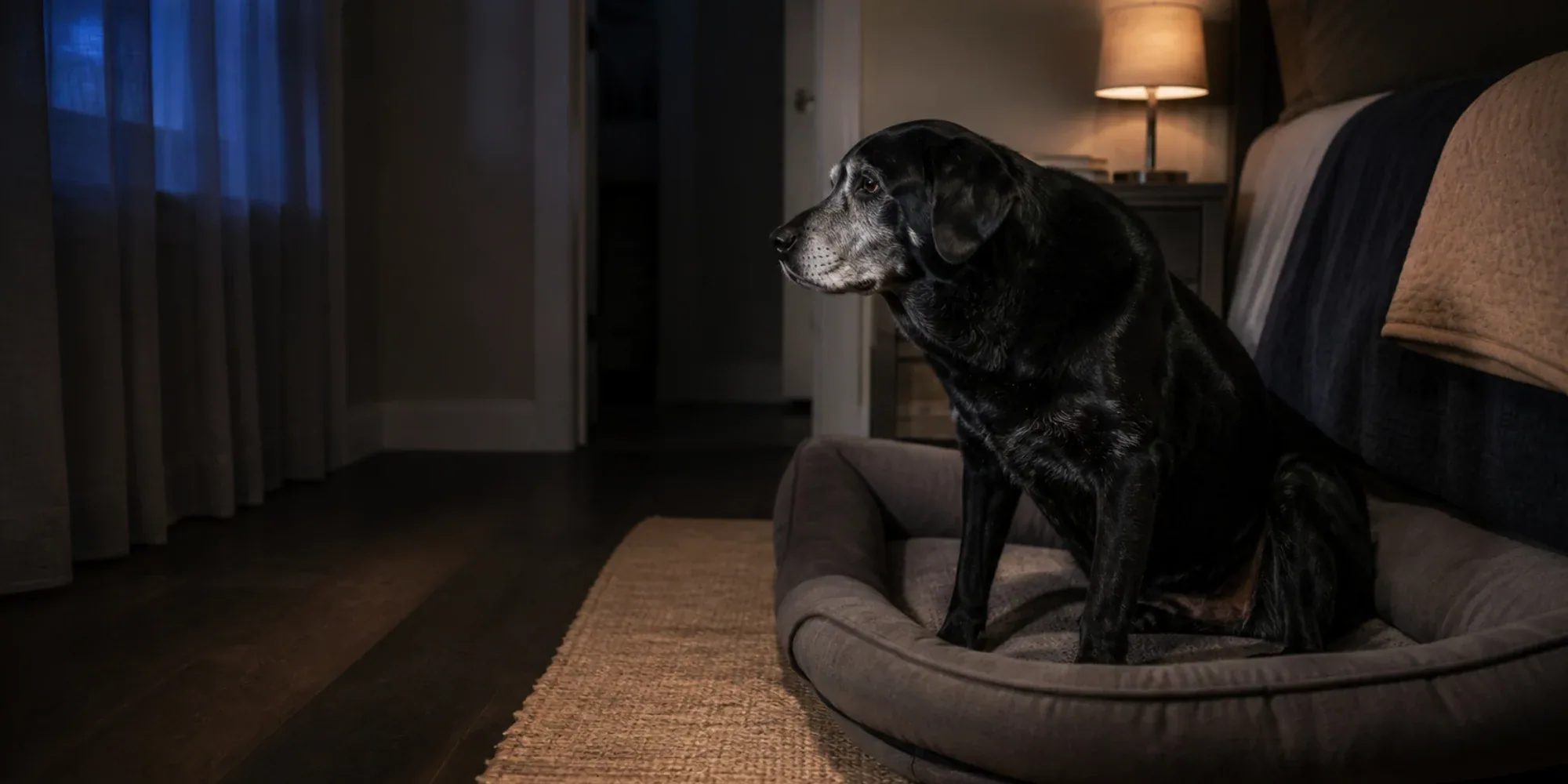
Senior dogs are frequently restless at night due to underlying medical issues, most notably osteoarthritis pain or cognitive dysfunction, rather than simply a lack of comfort. A vet-first approach means scheduling an examination to diagnose and manage these conditions medically before attempting to solve the problem with a new bed. Once a veterinarian establishes a pain management or care plan, owners can optimize the physical sleep environment by ensuring easy access without jumping, providing stable and certified supportive foam to relieve joint pressure, and selecting breathable materials to prevent overheating.
The Vet-First Principle: Recognizing Restlessness as a Medical Symptom
When a senior dog spends the night pacing, panting, shifting positions, or vocalizing, owners often assume the dog is simply uncomfortable. This assumption frequently leads to purchasing new bedding in hopes of securing a peaceful night of sleep. However, for an aging dog, nighttime restlessness is rarely just a physical preference for softer materials. Instead, this behavior is a significant clinical indicator that the dog is experiencing physical pain, discomfort, or neurological changes. Relying solely on new bedding to solve this problem delays medical intervention and leaves the underlying cause unaddressed.
The most common culprits behind nocturnal pacing are osteoarthritis and cognitive dysfunction. With osteoarthritis, the dog's joints become stiff during periods of rest—a process known as gelling. The inflammation itself does not worsen simply because the dog is stationary; rather, the stiffness causes acute pain when the dog finally attempts to move or reposition. As the dog tries to alleviate the aching pressure on their hips, shoulders, or spine, this gelling effect makes settling back down difficult, prompting them to constantly get up. Conversely, cognitive decline disrupts the circadian rhythm and causes confusion, leading to anxiety and wandering in the dark. A supportive surface might cushion a joint, but it cannot reduce internal inflammation or neurological changes.
Because restlessness is typically a symptom of these broader conditions, scheduling a veterinary examination is essential. A veterinarian can accurately diagnose the specific source of discomfort through physical exams, blood panels, or joint imaging. Based on these findings, the vet can prescribe a targeted management plan that might include pain relief medications, joint supplements, or anxiety-reducing therapies. Establishing this precise medical baseline ensures the dog receives the necessary physiological support to remain comfortable at night, which a foam mattress cannot provide on its own.
While waiting for a veterinary appointment, owners can gather valuable observations to share with their clinic. Tracking the frequency, timing, and specific behaviors associated with the dog's restlessness provides a clearer clinical picture for the veterinarian. Educational platforms developed by experts can help owners recognize the early warning signs of joint disease before the appointment. For example, the Canine Arthritis Resources & Education organization provides free, evidence-based tools designed to help pet parents and veterinary teams identify, diagnose, and manage canine arthritis. Utilizing these expert-developed resources makes it easier to spot arthritis signs early and understand the comprehensive management options available. Canine Arthritis Resources & Education | Dog arthritis tips and resources
Although a medical diagnosis is crucial for treating the root cause, basic safety evaluations and zero-risk improvements to the physical space should happen immediately. Owners do not need to wait for a veterinary protocol to place non-slip rugs on slippery floors or remove immediate tripping hazards around the resting area. Once the immediate environment is secure and the vet establishes a care plan, owners can safely implement larger modifications. Accessibility and shared comfort become practical priorities. Owners managing a highly anxious or immobile dog sometimes opt for expansive setups like a Custom Foldable Human Dog Bed, allowing them to rest comfortably alongside their senior pet to provide reassurance. By combining proactive safety measures with professional medical care, owners ensure that environmental upgrades act as effective, complementary tools. For company-specific information, see Lincellipet.
Common Causes of Disrupted Sleep: Pain, Temperature, and Cognitive Changes
Nighttime restlessness in senior dogs rarely looks the same from one pet to the next. Because the underlying triggers vary, observing exactly how a dog behaves when they cannot sleep provides crucial clues. Differentiating between a dog that cannot get comfortable, one that is overheating, and one that is confused helps owners document useful information for their veterinarian. Once the primary medical cause is identified and treated, these same observations guide which specific changes to the physical sleep environment will actually offer relief.
Joint pain from osteoarthritis is one of the most frequent causes of disrupted sleep in aging dogs. When pain is the primary driver, restlessness typically manifests as an inability to settle. An arthritic dog might lie down, groan, abruptly stand up, circle, and attempt to rest on a different side. The physical pressure of a hard floor or a flattened bed exacerbates joint inflammation, causing aching that forces the dog to shift constantly. Communicating this specific shifting behavior to a veterinarian usually leads to a targeted pain management plan. After medical intervention, the corresponding environmental adjustment focuses heavily on structural support, utilizing dense foams that prevent the dog's heavier pressure points from sinking through to the solid floor.
Alternatively, a senior dog might pace and shift locations due to an inability to regulate their body temperature. As dogs age, metabolic changes can make them highly sensitive to heat. Temperature-driven restlessness often looks different from pain-driven shifting. A hot dog will typically pant heavily while resting and may actively seek out uncarpeted tile or hardwood floors, abandoning a plush bed entirely. If an owner notices their dog constantly migrating away from soft surfaces toward cooler areas, adding a thicker, heat-trapping bed will only worsen the disruption. For these dogs, the eventual environmental solution requires prioritizing breathable materials and open structures that allow body heat to dissipate naturally.
Cognitive dysfunction, often compared to human dementia, presents entirely different nocturnal challenges. Dogs experiencing cognitive decline frequently suffer from a disrupted circadian rhythm, leading them to stay awake when the house is dark. Restlessness caused by cognitive changes usually involves aimless pacing, standing in corners, staring at walls, or vocalizing without an obvious physical trigger. These dogs are not necessarily physically uncomfortable; they are anxious and confused. When owners report these signs, veterinarians can discuss specific neurological support. Environmentally, a dog with cognitive dysfunction benefits most from a secure, consistent sleep space that is easy to locate and free from spatial barriers to reduce nighttime disorientation.
While pain, temperature sensitivity, and cognitive decline are distinct issues, they frequently overlap. A dog might wake up due to an aching hip and then become disoriented in the dark. By carefully separating these symptoms, noting whether the dog is panting, limping, or wandering aimlessly, owners can provide a clear behavioral timeline to their veterinary clinic. This precise communication guarantees the dog receives the correct medical diagnosis and ensures the owner knows exactly which physical properties to evaluate when assessing the dog's sleep environment.
The Checklist Phase 1: Floor Traction and Bed Accessibility
While securing a veterinary pain management plan is crucial, basic safety optimizations to the physical sleep space should be implemented right away to prevent injury. Owners do not need to wait for a medical protocol to begin the first phase of this environmental checklist, which focuses on the immediate surrounding floor rather than the bed itself. Evaluating floor traction and bed accessibility ensures the aging dog can transition smoothly from resting to standing without straining stiff joints. A highly supportive mattress is fundamentally useless if the senior dog is afraid to approach it or struggles to stand up safely in the dark.
Hardwood, laminate, and tile floors present a significant hazard for senior dogs, particularly those managing osteoarthritis or muscle atrophy. When an older dog wakes up stiff in the middle of the night, they rely on friction to push themselves upright. On a slippery surface, their paws slide outward, forcing them to expend exhausting effort just to stabilize their stance. This repeated micro-slipping aggravates joint pain and creates a lingering fear of falling, causing the dog to pace nervously rather than lying back down. Placing large, rubber-backed area rugs or non-slip mats directly around the sleep area gives the dog a secure runway to enter and exit their bed with confidence, preventing the immediate physical strain that triggers nocturnal wandering.
Beyond the surrounding floor, the physical design of the bed's entry point dictates how easily the dog can use it. Many traditional pet beds feature high, wrap-around bolsters. While these provide a sense of security, stepping over a thick bolster requires a senior dog to lift their limbs higher than is comfortable. Tripping over this barrier in the dark can jar an arthritic shoulder or hip, immediately waking the dog and triggering a pacing episode. A more accessible setup involves a bed with a lowered entry point or a completely flat surface. This allows the dog to shuffle onto the bed seamlessly rather than navigating a structural hurdle every time they rest their aching body.
The spatial positioning of the bed within the room is equally critical for nighttime comfort. Senior dogs often lose the tight spatial coordination they had in their youth. When attempting to rise, they may need extra room to extend their front legs and build momentum. If a bed is wedged tightly between a wall and heavy furniture, the dog may feel trapped or struggle to find the necessary physical leverage to stand up. Ensuring a wide, unobstructed perimeter around at least three sides of the bed allows the dog to approach and leave from whatever angle feels least painful for their joints.
Finally, accessibility encompasses how the sleep area interacts with the household's broader nighttime environment. Aging dogs frequently experience diminished vision and hearing, making them easily startled by sudden shadows. Placing the bed against a quiet wall away from drafty doorways helps maintain a stable environment that encourages uninterrupted rest. For dogs with cognitive decline or poor eyesight, adding a dim nightlight near the bed reduces anxiety and helps prevent accidental tripping over nearby obstacles. Furthermore, keeping the bed in a predictable location every night is vital, as moving it disrupts spatial memory and increases confusion. By stabilizing the floor surface, removing entry barriers, providing gentle illumination, and securing a consistent location, owners create an accessible foundation that maximizes the effectiveness of supportive materials.
The Checklist Phase 2: Base Support and Material Integrity
After evaluating floor traction and ensuring a senior dog can safely access their sleep area, the next critical phase of the checklist examines the bed itself. When a veterinarian diagnoses a dog with osteoarthritis, the resulting management plan relies heavily on minimizing physical pressure on inflamed joints during rest. A bed that initially feels plush to the touch might seem ideal, but if its internal structure compresses entirely under the dog's weight, the sleep surface offers no actual relief. This phenomenon, known as bottoming out, means the dog's heaviest pressure points ultimately rest against the hard floor. The resulting discomfort forces the dog to wake up and shift positions repeatedly, directly undermining the goals of their veterinary pain management protocol.
The distinction between perceived surface softness and actual structural support is fundamental when evaluating a sleep environment for an older dog. Standard polyfill beds or single layers of low-density foam often lack the structural resistance necessary to support an arthritic animal. As the dog lies down, the loose material simply displaces to the sides rather than contouring and supporting the body. A structurally appropriate bed requires a careful balance of yield and resistance. The surface must have enough give to cushion protruding joints, such as hips and elbows, while the underlying base must remain firm enough to keep the dog's entire body suspended comfortably above the unyielding ground.
Understanding how foam is evaluated helps owners make informed decisions about material integrity. Established testing frameworks evaluate foam components to ensure they maintain their structural integrity over time. For example, the official technical guidelines for CertiPUR-US certification define how flexible polyurethane foam intended for furniture and bedding is tested for physical property and environmental criteria. When a foam core meets established physical property guidelines, it demonstrates a specific capacity to withstand repeated compression without permanently losing its shape. This tested durability is particularly important for heavy or large-breed senior dogs that place significant daily strain on the exact center of their resting space. Technical Guidelines
Owners can accurately assess a bed's base support at home without relying on heavy human pressure. Pressing a knee into a pet bed artificially bottoms out mattresses that are otherwise supportive for a dog, because an adult concentrates too much weight onto a small area. However, pressing down on the top of the mattress next to the resting dog is also ineffective. This mistake measures only the resistance of the uncompressed foam adjacent to the load, providing a false positive for support. Instead, the best way to evaluate structural support is to check directly under the point of maximum load. Once the senior dog settles, the owner should slide a flat hand underneath the bottom of the bed—between the mattress base and the hard floor—directly beneath the dog's heaviest pressure points, like the hips or shoulders. If the owner feels the weight of the dog's joints pressing through the foam against their hand, the bed is actively bottoming out. This physical test confirms that the foam lacks the necessary density to provide meaningful joint relief.
Addressing these structural requirements often involves selecting layered orthopedic beds engineered with multiple distinct materials. For instance, a quality multi-layer foam dog bed typically utilizes a high-density structural base to prevent bottoming out entirely, topped with a secondary layer of responsive memory foam designed to conform to the dog's body. This layered approach isolates the dog from the rigid floor while simultaneously providing the soft surface contouring necessary to soothe stiff joints. By prioritizing a high-density structure over a single block of low-quality foam, owners ensure their dog receives consistent, targeted support throughout the night, significantly reducing the need to pace. For company-specific information, see Lincellipet.
While prioritizing structural integrity is necessary, owners must also consider the practical tradeoffs associated with thick, dense foam. Adding substantial height to a bed to increase its support can inadvertently create an accessibility barrier, requiring the senior dog to step up awkwardly or strain their hind legs to get in and out. The ideal solution balances adequate foam density with a manageable profile, ensuring the dog can walk directly onto the surface without lifting their paws excessively. By continually evaluating both the internal support of the mattress and the dog's physical ability to use it easily, owners can create a physical sleep environment that effectively complements ongoing veterinary care.
The Checklist Phase 3: Temperature Regulation and Cover Breathability
As dogs age, their bodies undergo metabolic changes that diminish their natural ability to regulate temperature efficiently. While a younger dog might easily cool down after sleeping on an insulated surface, a senior dog is much more susceptible to trapped heat. Because dogs primarily release heat through panting and their paw pads rather than full-body sweating, the microclimate created by their resting space is highly influential. The immediate physical environment significantly impacts their thermal comfort and overall ability to cool down at night. If an aging dog is medically managed for pain but continues to wake up pacing and panting, the sleep environment itself may be acting as an unintended heat trap.
Differentiating between a dog seeking physical support and one seeking thermal relief is straightforward when observing their midnight habits. A dog struggling with an overly warm bed often starts the night resting peacefully, only to wake up an hour or two later visibly panting. Rather than shifting positions within the bed—a behavior indicating joint discomfort—a dog suffering from heat retention typically abandons the mattress entirely. They actively seek out uncarpeted tile, linoleum, or hardwood floors because these bare surfaces naturally draw heat away from their bodies. If a senior dog consistently chooses a hard floor over a new orthopedic mattress, the bed's insulative properties are likely overriding its structural benefits.
The topmost layer of the sleep environment serves as the primary barrier between the dog and the supportive base. Many traditional pet beds feature plush textiles like faux fur, thick fleece, or heavy velvet to appeal to the human perception of coziness. While these materials feel soft, they are highly insulative and lock radiant body heat closely against the skin. For a senior dog struggling with thermoregulation, these fabrics quickly become uncomfortable. Swapping thick covers for highly breathable materials allows air to circulate freely around the animal. This continuous airflow helps dissipate excess heat into the room before it forces the dog to wake up and pace.
The internal structure of the bed also dictates how much heat it retains, presenting a necessary tradeoff with orthopedic support. High-density foam is excellent for protecting arthritic joints, but dense materials inherently limit internal air circulation. When a heavy dog sinks into a solid block of memory foam, the material conforms closely to their shape, insulating them on multiple sides. To balance structural support with thermal neutrality, the foam configuration must actively mitigate heat buildup. Open-cell foam structures or layered designs with internal channels promote necessary airflow beneath the dog's resting body. Acknowledging this tradeoff ensures the owner does not solve a pain problem only to introduce a new thermal disruption.
Successful temperature regulation requires seasonal flexibility and awareness of the broader room layout. A bed that remains perfectly comfortable during the winter might become intolerably warm in the summer, prompting a sudden return of nocturnal pacing. Owners can adapt the environment by swapping covers seasonally or adjusting the bed's location. Checking proximity to heating vents, radiators, or corners that trap stagnant air ensures external heat sources are not artificially warming the area. By prioritizing material breathability and monitoring the ambient room temperature, owners can effectively eliminate thermal discomfort as a trigger for midnight restlessness.
Seeking Advice and Adapting the Environment Over Time
When navigating the complexities of senior dog care, owners frequently turn to online communities for support. Research analyzing pet-oriented social networks indicates that dog owners distinctly use these platforms to focus on their relationship with their pets and actively look for advice. Engaging with these communities provides undeniable emotional support and practical day-to-day management tips. Reading about how another owner successfully introduced non-slip rugs or transitioned a reluctant dog to a flat, accessible mattress can offer valuable inspiration when a senior dog is struggling to sleep. Sharing these experiences helps owners feel less isolated during the demanding reality of nighttime pacing and panting. The more people I meet, the more I like my dog: A study of pet-oriented social networks on the Web | First Monday
However, while crowd-sourced advice is excellent for practical environmental ideas, it must remain entirely subordinate to professional veterinary care. The primary danger of relying solely on an online community is the temptation to adopt a popular product recommendation as a universal medical cure. A specific high-bolster bed might have miraculously solved one dog's nighttime restlessness because that dog needed a sense of enclosed security for cognitive dysfunction. If an owner applies that same solution to a dog pacing from severe hip dysplasia, the thick bolster becomes a painful physical barrier that actively worsens the dog's condition. Online networks cannot perform clinical exams, evaluate joint inflammation, or prescribe pain management protocols.
Furthermore, a senior dog's physical and cognitive needs are rarely static. Osteoarthritis is a progressive disease, and cognitive dysfunction often advances over time. An optimized sleep environment that effectively supported a dog at age ten might become entirely inadequate by age twelve. A mattress that initially offered the perfect balance of firm base support and soft contouring might eventually sit too high off the ground as a dog's hind-leg strength diminishes. Owners must recognize that the environmental checklist is not a one-time task but a continuous process of observation and adjustment.
Managing nighttime restlessness requires an ongoing feedback loop between the owner, the veterinary clinic, and the physical home environment. When new restless behaviors emerge—such as a dog suddenly refusing to use a previously favored bed or slipping on a floor they used to navigate easily—the first step is always another veterinary consultation. The vet can determine if the dog's medication needs adjusting or if new joint degradation has occurred. Only after this medical update should the owner look to their community for practical ways to implement the vet's new mobility guidelines, whether that means switching to a thinner, denser foam pad or adding specialized ramps to bypass steps.
Ultimately, a peaceful night of sleep for an aging dog depends on acknowledging that restlessness is a profound form of communication. It signals physical pain, temperature sensitivity, or neurological confusion that requires a clinical response. By committing to a vet-first approach, owners establish the necessary medical foundation to relieve internal discomfort. From there, continuously evaluating floor traction, foam density, and material breathability ensures that the physical environment actively supports the dog's changing needs, helping to turn a stressful nighttime routine into comfortable, restorative rest.
